Why Does Skin Get Crepey at 50? I Spent Three Months Researching the Answer


I noticed it last spring — the skin on my upper arms had developed a texture I can only describe as tissue-paper thin. Not dramatically changed, but different enough that I kept catching it in mirrors. The crepe-paper look you read about. I'd thought it was something that happened to other people, or to women a decade older. I was 51.
My first instinct was to buy a better moisturizer. My second was to look for an explanation — an actual one, not the kind that stops at "collagen declines with age" and leaves you feeling like you've already missed the window for anything useful. That second instinct is what led to three months of reading research, asking my doctor questions, and eventually changing how I think about skin from the outside in.
What I found was more specific than anything I'd read in a beauty magazine. And it actually pointed somewhere actionable.
The first thing I learned: it's not just about collagen
The conversation about aging skin is dominated by collagen. Collagen serums, collagen supplements, collagen-boosting treatments — it's the word that appears in every headline. And collagen does matter. But when I started reading about what specifically creates the crepey texture — the papery thinness, the slow snap-back, the way skin seems to have lost its ability to hold a shape — a second protein kept coming up.
Elastin. It is the structural protein responsible for recoil. When you press and release young skin, it springs back immediately. That immediate return is elastin at work. Collagen provides the thickness and strength of the framework. Elastin gives it the spring. When the spring goes, skin stays folded a beat too long, catches light differently, and looks crinkled in a way that collagen alone can't explain.
"The crepey quality is really an elastin story as much as a collagen story. We don't talk about it as much because there's less you can do about elastin directly — your body largely stopped making new elastin in your twenties."
That quote is paraphrased from a conversation with my dermatologist. She's the one who reframed the whole picture for me. Collagen continues to be produced throughout life, though at a declining rate. Elastin is different: the body builds essentially all of its elastin in youth, and after the early twenties, what you have is what you maintain.
The second thing I learned: why 50 is different from 40
This was the piece that finally made sense of the timing question. Elastin degrades gradually over decades — so why does the visible change seem to arrive so suddenly in the early fifties for so many women, rather than slowly from the thirties onward?
The answer my doctor gave me: elastin has a functional reserve, a structural buffer. Slow degradation from sun exposure erodes it over years, but the reserve absorbs the change below the threshold of visibility. Then, around the perimenopausal transition, a second force arrives.
Estrogen plays a role in maintaining the structural proteins of the dermis. As estrogen declines, the natural protection it provided the dermal matrix weakens. For women whose elastin reserves have already been eroding quietly for two or three decades, this hormonal shift can push them past the threshold — suddenly, the crepe texture that was invisible becomes visible. It isn't that it happened overnight; it is that the cushion finally ran out.
Add to this the cumulative effect of UV exposure — which activates enzymes that break down elastin fibers — and the picture becomes clear. The fifties aren't the beginning of elastin loss. They're when decades of gradual change finally become apparent.
The third thing I learned: why moisturizer doesn't fix it
I'd been applying good moisturizer consistently for years. It helped temporarily — skin looked better for a few hours after applying — but by the next morning, the texture was back. I'd assumed I wasn't using the right product. What I actually learned is that the ceiling on topical products is set by basic skin anatomy.
The outermost layer of skin — the stratum corneum — is a barrier. Its job is to keep the external environment out, and it does that effectively regardless of whether the external environment is a pollutant or an expensive ingredient. Large molecules, including collagen fragments and most antioxidants, cannot penetrate to the dermis — the deeper layer where elastin and collagen live.
Moisturizers hydrate the surface and temporarily blur the appearance of texture. But the structural problem lives below the reach of anything applied topically. Understanding this was, strangely, a relief. The moisturizer wasn't failing me. It was simply doing the only thing it could — working on the surface — while the real issue was elsewhere.
What the research actually points toward
This is where my research became genuinely useful. The question I started asking was: if the dermis can't be reached from the outside, what supports it from the inside?
The structural proteins in the dermis — collagen and elastin — depend on an environment of cofactors to function. Collagen synthesis, in particular, requires specific micronutrients to proceed correctly. Vitamin C is a required cofactor for the enzymes that give collagen its stable structure. Without adequate vitamin C, collagen is produced in a weaker, less organized form. Copper is essential for the enzyme that cross-links collagen and elastin fibers into a resilient network. Zinc supports the skin's ongoing repair mechanisms and helps protect existing structural proteins from oxidative damage.
None of this adds up to a promise that you can replace lost elastin — that's not how it works. What it does mean is that the nutritional environment the dermis operates in is something you can influence. And that fibroblasts — the cells responsible for building the dermal matrix — are still working in your fifties and can still benefit from having the right materials to work with.
Dermatologists increasingly mention nutritional strategies alongside topical ones for exactly this reason: they reach the dermis, because they travel through the bloodstream. Surface application cannot.
What I decided to try
After doing this research, I started looking for a supplement specifically formulated around dermal support micronutrients — not an isolated collagen supplement (which faces the same bioavailability limits as topical collagen), but something targeting the nutritional environment that collagen and elastin synthesis depend on.
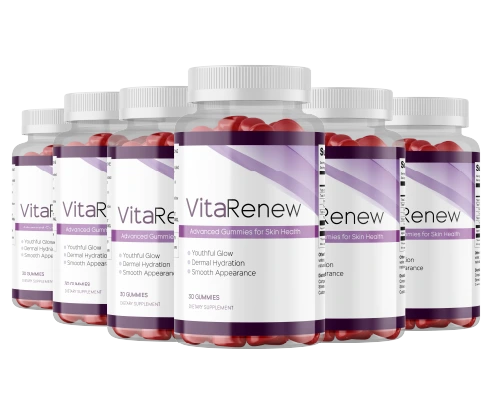
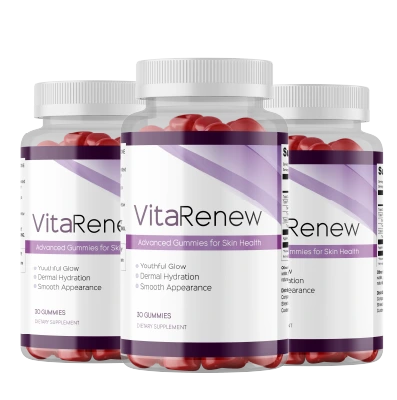
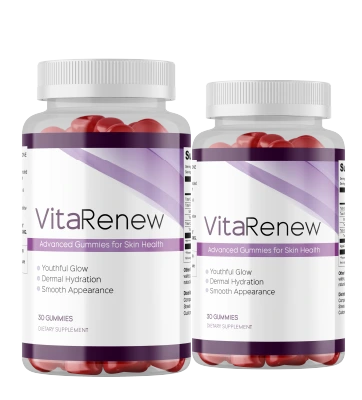
VitaRenew is a daily gummy formulated for women 40 and over that covers the specific cofactors I kept reading about:
- Vitamin C & copper — the two most directly linked to collagen production and structural matrix integrity
- Zinc — for ongoing repair processes and antioxidant protection in the dermis
- Easy daily format — a gummy, which made it genuinely easy to stay consistent
I want to be clear: this is a supplement, not a treatment. It supports a nutritional environment — it does not add elastin or reverse the structural changes of decades. But for someone who now understands that the dermis can only be supported from within, it's a rational place to start.
What other women are finding
"I was in the same place — trying every topical, getting temporary results. A friend forwarded me an article about the dermal nutrition angle and something clicked. I started a collagen-support supplement and within about six weeks I genuinely noticed less of the crepe texture on my forearms. Not gone, but meaningfully different."
"My dermatologist explained that the skin structure problem lives in a layer that creams don't reach. She recommended I look at nutritional support alongside topicals. Two months in, the skin on my chest looks noticeably smoother — and I feel like I finally understand what I'm actually doing and why."
These statements reflect individual experiences. Results are not typical and will vary from person to person.
The answer I was looking for
After three months of research, the "why" behind crepey skin at 50 turned out to be more specific than "aging" — and that specificity made it more useful. Crepey skin reflects the convergence of decades of elastin degradation from UV exposure, the structural role that collagen plays as it too declines, and the hormonal transition that removes a key protective influence from the dermal matrix. Surface products reach the surface. Supporting the dermis requires supporting it from the inside — through the nutritional environment that the cells building and maintaining skin structure depend on. That's the shift in thinking that changed how I approach my skin.