What Is Crepey Skin? I Had It for Two Years Before I Knew What to Call It


I was 43 when I first noticed it. Standing at the bathroom sink, reaching for something on the shelf, I caught the back of my hand in the mirror light. The skin looked different. Not wrinkled exactly — it was more like crinkled paper. Fine ripples, a papery looseness, a texture that had nothing to do with how I'd slept or how much water I'd drunk. I assumed it was dryness and bought a richer hand cream. It didn't help.
For the next two years, I cycled through serums, oils, and body lotions. Some made the surface look smoother for an hour or so. But by evening, that texture was back. It had spread too — to my chest, my inner arms, the soft skin just below my elbows. I knew something was happening, but I didn't have a word for it. I didn't know what to search for.
The word, I eventually found, is crepey.
What crepey skin actually means
The name comes from crêpe paper — that lightweight, crinkled material with a distinctly rippled surface. Once you know the word, the description is immediate and precise. Crepey skin is not the same as wrinkles. Wrinkles are discrete lines, formed at expression points or fold zones. Crepey skin is diffuse — it covers broader areas, and its defining feature is a loss of surface tension and thickness. The skin has become thin enough and loose enough that it bunches and crinkles when compressed.
There's a simple way to check: gently pinch a small fold of skin on the back of your hand and release it. Young skin springs back almost immediately. Crepey skin forms small, dense folds that are slow to settle. You can also see it clearly in side light — natural light coming from a window at an angle will show fine all-over rippling on areas like the chest, inner arms, or upper arms.
Most women I've spoken with describe the same trajectory I had: noticing the texture change, not knowing what to call it, buying more products, not seeing lasting results, and eventually — sometimes years later — learning that it has a name and a structural cause that creams can't address.
Why it happens — and why moisturizer doesn't fix it
I spent a lot of time on this question after I finally named the problem. Here is the short version of what I found.
Skin has layers. The outer layer — the part you apply products to — is called the epidermis. Below it is the dermis, a dense tissue made up of collagen and elastin fibers. Collagen gives skin its thickness and tensile strength. Elastin allows it to recoil after being stretched or pressed. In young skin, this dermal architecture is dense, organized, and well-hydrated. Crepey skin is what a thinning, partially depleted version of this architecture looks like from the surface.
The outer skin is designed to keep the outside world out. This means even the most expensive serums and topical products — including topical collagen — largely cannot penetrate past the surface into the dermis where the structural change is actually occurring. That is why they produce short-term visual improvement and not lasting change. You are addressing the surface, not the layer below it.
Collagen production begins declining from the mid-twenties at a slow, gradual rate. For most women, this goes unnoticed for twenty years. Then, around perimenopause, estrogen — which actively supports collagen density and skin thickness — begins to decline too. The two processes overlap, and the structural loss that had been quietly accumulating becomes suddenly visible. For many women that moment arrives in their forties or early fifties, and it can feel like the change happened overnight even though it was building for decades.
What I started using — and what I'd suggest looking into
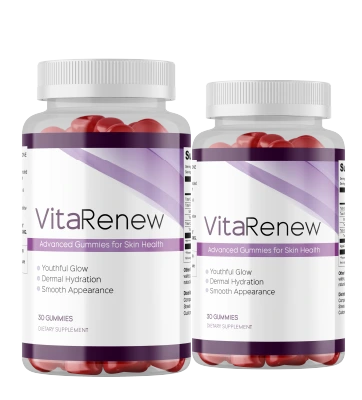
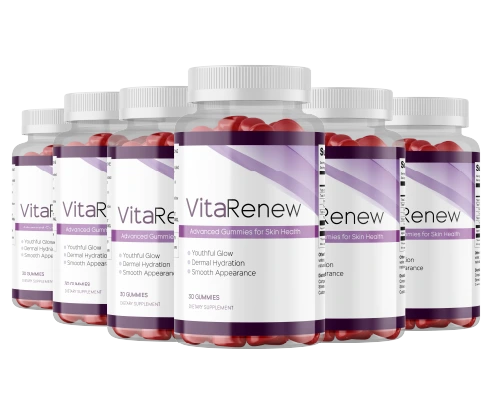
After understanding the biology, I stopped looking at surface products for this particular problem and started looking at what supports the skin's own collagen-production process from the inside. That's how I found VitaRenew — a daily collagen-support gummy made for women in their 40s and 50s.
It doesn't deliver collagen directly (which faces the same penetration problem as topical products). Instead it provides the micronutrients that the body's collagen-synthesis machinery actually depends on:
- Vitamin C — required for the enzymes that give collagen its stable structure; without it, collagen is assembled incorrectly
- Copper — needed to cross-link collagen and elastin fibers into the organized network that makes young skin firm and springy
- Zinc & supporting nutrients — for skin integrity and protection from the oxidative processes that degrade structural proteins
- Daily gummy format — the kind of thing you can actually stick with long enough to matter
It's a supplement, not a miracle. But for the first time in two years I noticed a genuine change in the texture of my neck and chest after about six weeks. My hands looked smoother. My arms felt less like tissue paper when I touched them. I've been taking it consistently since then.
What other women say
"I googled 'why does my skin look like crepe paper' and finally found a real explanation. Tried VitaRenew after reading about the collagen connection. My arms are genuinely smoother — I can feel the difference when I touch them."
"I had no idea there was a name for this. I thought it was just bad dryness. Understanding that it was structural — and that you can support it nutritionally — was what changed things for me."
These statements reflect individual experiences. Results are not typical and will vary from person to person.
If you're still trying to name what you're seeing
If you've been staring at a texture on your hands or arms or chest that you couldn't quite describe, and creams haven't changed it — you might be looking at crepey skin. It is not a failure of hydration. It is a structural change in the layer below the reach of anything you apply to the surface. Once I understood that, I stopped being frustrated by products that couldn't work and started asking a better question: what supports the process underneath? VitaRenew is the best answer I found.