What Causes Crepey and Saggy Skin — Why They Show Up Together After 40


Sometime around my mid-forties, I started noticing two things happening to my skin at once. On my upper arms and across my chest, there was a new texture — fine and papery, like the skin had been thinned somehow, folded too many times. And separately, there was something happening with the firmness: if I pressed on my forearm, the skin would release a beat late. Not dramatically. Just noticeably. Not quite right.
I assumed these were two unrelated aging changes and treated them separately. I bought a firming serum for one and a plumping cream for the other. Neither did much that lasted beyond a few hours. After about a year of this, I decided to stop treating symptoms and actually look into what was causing them.
What I found changed how I think about skin entirely.
They're not two problems — they're two sides of the same one
Skin has a structural layer called the dermis, and it's where almost everything that determines "skin quality" actually lives. Two proteins dominate: collagen and elastin. Understanding what each does makes the two changes I was experiencing suddenly make sense.
Collagen is what gives skin its thickness, density, and resistance. Think of it as the structural bulk — the substance beneath the surface that makes skin look full and resilient. When collagen thins over time, the skin loses that underlayer. The surface becomes fine and papery, like tissue paper held up to light. That is crepey skin — not dryness, not lack of moisture, but actual thinning of the structural layer beneath.
Elastin is different. It doesn't give skin its thickness — it gives skin its spring. It's what makes young skin snap back after being stretched or pressed. When elastin breaks down, the snap-back is gone. The skin still moves, but it takes a moment to recover, or never quite returns to where it was. That lost snap, that slightly loose quality — that's the sag I was noticing.
Why do crepey and saggy appear at the same time?
Once I understood that these were two different proteins — collagen and elastin — I assumed they must have different causes. They don't, really. Both collagen and elastin live in the dermis. Both decline with age: collagen at roughly one percent per year from the twenties onward, elastin gradually degraded by UV exposure over the same decades. Both accelerate their decline when estrogen drops during perimenopause, because estrogen directly supports dermal protein density and repair.
So by the time a woman is in her mid-forties, she's often dealing with both — not because of bad luck, but because the two proteins were always in the same structural system and facing the same upstream triggers. They decline together. They show up together.
Why the creams didn't work
Understanding this also explained the frustrating pattern with topical products. The outer layer of skin — the epidermis — is designed to keep things out. It's evolved to be a barrier. Most of the active ingredients in firming creams and plumping serums, even expensive ones, don't penetrate to the dermis where collagen and elastin actually are. They stay in the epidermis, offering temporary hydration effects that improve the surface appearance briefly before fading.
That's why moisturizers offer an hour of improvement and then the texture is back. They're working on the wrong layer. The structural changes are below what topical products can reach.
What I started looking into instead
If the changes were happening in the dermis, and the dermis is where the body synthesizes and maintains collagen and elastin, the question became: what does the dermis need to do that job well?
The answer turned out to be surprisingly specific. Collagen synthesis depends on vitamin C — not as a supplement claim but as basic biochemistry. Vitamin C is required by the enzymes that give each collagen molecule its stable structure. Without it, collagen is made in a structurally compromised form. That's not a new idea; it's the mechanism behind scurvy, just at a mild everyday level.
More interesting to me was what I learned about elastin. The enzyme that cross-links both collagen fibers and elastin fibers into a strong, organized network — lysyl oxidase — requires copper. Without copper, both proteins get synthesized but never properly organized into the dense, resilient architecture that makes young skin look and feel the way it does. One enzyme. Two proteins. One nutrient gap potentially affecting both changes I was experiencing.
What I found — and what I'd suggest looking into
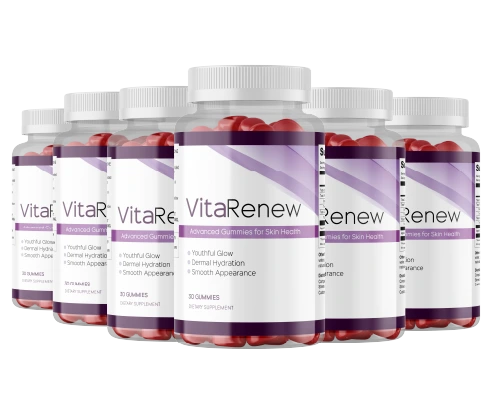
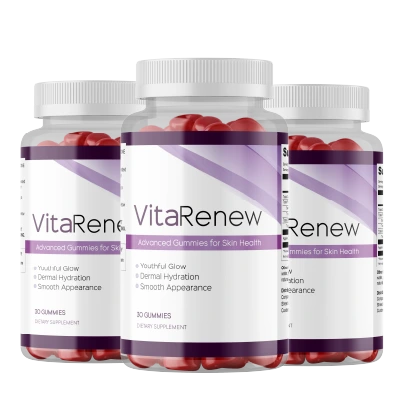
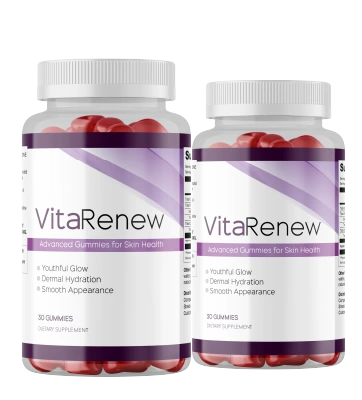
After doing this research, I started looking for a nutritional approach that addressed the shared root of both problems rather than each symptom separately. The product I found and kept using was VitaRenew, a daily collagen-support gummy made for women in their 40s and 50s.
What made it relevant to me was the ingredient logic:
- Vitamin C & copper — the two cofactors most directly involved in both collagen formation and elastin organization in the dermis (that lysyl oxidase connection)
- Zinc & antioxidant support — for ongoing skin integrity and protection from the oxidative damage that accelerates structural decline in both proteins
- Daily gummy format — easy enough to actually be consistent with, which matters for a nutritional approach
I want to be clear: this is a supplement, not a treatment. It's not going to undo years of change and it's not intended to diagnose or treat any condition. But as a way to give the dermis the nutritional environment it needs to support both collagen and elastin — instead of chasing the two symptoms separately with topicals — it made more sense to me than anything else I'd tried.
What other women are saying
"I'd always thought of the crepey texture and the loose feeling as two different problems and was buying different things for both. Once I read about the shared cause — the collagen and elastin both depending on the same enzyme — it clicked. I've been using VitaRenew for about six weeks and I've noticed real improvement in the texture on my upper arms."
"I mentioned the copper-elastin connection to my doctor and she said the science was solid. I wasn't expecting dramatic results but two months in the quality of my skin genuinely feels different — there's more life to it, more spring. I didn't expect a supplement to do that."
These statements reflect individual experiences. Results are not typical and will vary from person to person.
Two symptoms, one place to start
If you've been noticing both — the fine, papery texture and the skin that no longer fully bounces back — you're probably not dealing with two separate problems. You're seeing one structural system in the dermis declining in two related ways: collagen thinning, and elastin losing its spring. Understanding that changed how I approached both. Instead of applying a different product to each symptom, I started thinking about what the dermis actually needs to maintain the proteins involved in both. That's what led me to VitaRenew, and it's where I'd suggest starting.