Skin & Aging · Personal Story
I Blamed My Blood Pressure Medication for My Crepey Skin. Here's What I Actually Found Out.
Two years of quietly resenting a pill I needed. What I eventually learned changed the question entirely — and gave me something I could actually do about it.

I've been on lisinopril since I was 49. My blood pressure had crept up enough that my doctor wasn't comfortable watching it anymore, and the medication has done exactly what it's supposed to do — my numbers have been stable ever since. I don't have complaints about it. Except for the one I had for two years but never voiced out loud: I was convinced it was making my skin fall apart.
The skin on my hands and forearms had changed. Not dramatically, not all at once — it was more like waking up one day and realizing something had shifted when you weren't paying attention. The texture on the backs of my hands looked thinner. When I pinched the skin on my inner forearm, it didn't spring back the way it had. It stayed gathered for a moment, crinkled, the way crepe paper does. I was fifty-one. I'd read enough to know that skin changes after fifty. But this felt like more than that, and the only variable I could point to was the medication.
So I did what most people do: I Googled it at eleven o'clock on a Tuesday night, looking for someone to either confirm or dismiss what I suspected.
What I found — and what I didn't expect
The search results were, as they always are, a mixture of useful and alarming. I found references to the fact that some ACE inhibitors — the class lisinopril belongs to — can cause a dry cough (I don't have that) and occasional skin sensitivity. But the specific question I was asking, about crepey skin texture, didn't lead where I expected it to.
What kept appearing instead were references to corticosteroids — the class most clearly associated in dermatological literature with skin thinning. Prolonged corticosteroid use is documented to suppress fibroblast activity, and fibroblasts are the cells that produce collagen and elastin. Less fibroblast activity, over time, means less structural material in the dermis. That was a real and established connection. But I'd never taken a corticosteroid long-term, so it wasn't my answer.
The more I read, the more I started to see a different pattern. The skin changes I was experiencing weren't unique to women on my medication. They were almost identical to what women describe when they're simply in their early fifties — regardless of what medications they do or don't take. And the explanation for that wasn't the lisinopril. It was something that had been happening in my dermis for years.
I had been asking the wrong question. It wasn't "what is my medication doing to my skin?" It was "what has been happening in my dermis, and what does it actually need?"
What the dermis actually does — and stops doing
I want to explain this the way I wish someone had explained it to me at the beginning, because understanding it changed everything about how I approached the problem.
Beneath the surface of your skin — beneath the layer that a moisturizer or serum can reach — is the dermis. It's made of three main components: collagen fibres, which give skin its thickness and structural integrity; elastin fibres, which allow skin to stretch and return; and hyaluronic acid, which fills the space between them with moisture and volume. Together, these three things determine whether your skin looks plump and firm or thin and papery.
Collagen production starts declining slowly after your mid-twenties. You don't notice because the rate of loss is gradual and your skin has reserves. What changes in the forties and early fifties is that estrogen, which actively supports collagen density in skin, begins to fall. When estrogen declines, the rate of collagen breakdown starts to outpace the rate of production in a way that becomes visible. The skin on your hands gets thinner. The forearms look different. The neck changes. The texture acquires that papery quality where it used to have snap and resilience.
This is not something a blood pressure medication causes. My lisinopril wasn't responsible for what I was seeing. What was responsible was a structural process that had been running in the background of my forties, and I had simply arrived at the point where it became visible on the surface. The medication was coincidental timing, not causation. And once I understood that, the question changed completely.
The question that actually matters
If the dermis is losing structural density because of a decline in collagen production efficiency — and if fibroblasts, the cells that build collagen, are still present and still working, just less effectively — then the relevant question is: what does the production process depend on?
It turns out that collagen doesn't assemble itself automatically. Each molecule requires specific cofactors at specific steps in the manufacturing process. Without them, the fibroblasts produce structurally weaker output — incomplete collagen that can't integrate properly into the tight fibrous network the dermis needs. This isn't alternative medicine; it's the biochemistry of collagen synthesis that's been established for decades.
Three nutrients are critical:
- Vitamin C. Two enzymes in the collagen assembly process — prolyl hydroxylase and lysyl hydroxylase — are completely dependent on vitamin C to function. Without adequate vitamin C, the hydroxylation steps that give each collagen molecule its stable triple helix structure don't complete correctly. The result is structurally inferior collagen. This is why scurvy — extreme vitamin C deficiency — produces dramatic skin breakdown; you're watching collagen structural failure in real time.
- Copper. Once collagen and elastin fibres are produced, an enzyme called lysyl oxidase has to cross-link them into an organized, resilient network. Lysyl oxidase requires copper as its essential metal cofactor. Fibres produced without adequate copper for cross-linking are weaker and less elastic — even if the production rate is normal.
- Zinc. Zinc supports ongoing skin cell turnover and is involved in the balance of matrix metalloproteinases — the enzymes that break down old collagen. When zinc is adequate, this degradation-and-replacement cycle operates more efficiently. When it's not, turnover slows and repair lags.
I'd been taking a standard multivitamin for years. What I learned was that the amounts in most multivitamins — particularly for copper, which is easy to underestimate — aren't necessarily calibrated to support skin structure specifically. I had assumed I was covered. I hadn't thought carefully about whether I actually was.
What I decided to try
I was looking for something that combined these three cofactors in one place rather than assembling a stack of separate supplements. What I found — and settled on — was VitaRenew, a daily gummy built specifically around vitamin C, copper, and zinc. It's made in the USA in an FDA-registered facility. The 2-bottle kit is the lowest-cost way to evaluate it: two months of supply with a 60-day money-back guarantee, which meant the risk was genuinely low.
What I use
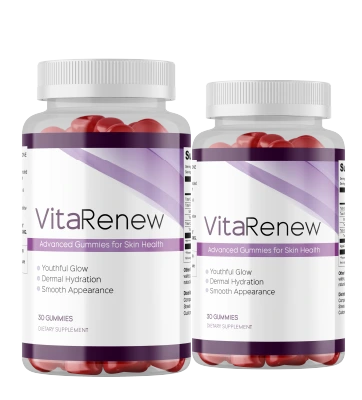
VitaRenew
Vitamin C, copper, and zinc in a daily gummy — the cofactors the skin's collagen assembly process depends on. Made in an FDA-registered, GMP-certified facility. No autoship, no subscription.
For asking a better question about your skin.
60-day money-back guarantee · One-time purchase, no subscriptionWhat the next four months looked like
The first six weeks: I noticed nothing specific. I'd taken enough supplements that had done nothing to keep my expectations grounded. I kept going. Around week eight, I noticed that the skin on my inner forearm felt different when I touched it — less loose when I pressed it lightly, slightly more resistance when I pinched. It was subtle enough that I questioned whether I was imagining it, so I took a photograph of my hands in the same light I'd used two months earlier.
The photograph was more persuasive than my perception had been. The backs of my hands looked different. Not dramatically — this wasn't a before-and-after transformation. But the texture was visibly changed, and the skin looked less translucent, less crinkled in the way that had bothered me every time I looked at my hands at a keyboard.
By month four, the change on my forearms was real enough that I'd stopped thinking about my medication as the culprit. Whatever was contributing to the texture — the age-related collagen loss, the estrogen decline, possibly the timing of the lisinopril overlapping with all of it — something had shifted. And it wasn't the medication I'd changed. It was what I was giving my dermis to work with.
"I was on prednisone for six months for an autoimmune flare and the skin thinning was significant. My rheumatologist said to expect it. When the medication ended I started focusing on the cofactor side of things — specifically vitamin C and copper — and the skin on my forearms has slowly come back. Not to where it was, but measurably better than the worst of it."
"I kept assuming the crepey texture on my hands was my thyroid medication. My endocrinologist told me skin changes like this at my age were happening regardless and that the medication wasn't making it worse. She was right — once I stopped blaming the prescription and started supporting my skin from within, I finally got somewhere."
These statements reflect individual experiences. Results are not typical and will vary from person to person.
The thing I would tell someone starting where I was
Stop trying to find the medication to blame. That question leads to frustration, not to anything you can do. The more productive question is always: what does my dermis actually need to do its job?
The answer is collagen production cofactors — the micronutrients the manufacturing process depends on — and most women over fifty aren't getting them in the amounts that would actually support dermal function. This is a fixable thing. It's not expensive to fix. And it starts with two months, a money-back guarantee, and a baseline photograph so you can actually see the change your eyes will adapt to miss.
I still take lisinopril. My blood pressure is still well-managed. And the skin on my hands looks better than it did when I was convinced the medication was the problem — because I stopped asking the wrong question.
Where to start
VitaRenew
The cofactor approach to supporting skin structure — vitamin C, copper, and zinc in a daily gummy. No autoship, 60-day guarantee.
Start with two months. Take a photograph first.
60-day money-back guarantee · One-time purchase, no subscription