Personal Health · Skin & Nutrition
What I Changed in My Diet After My Skin Got That Crepey Look After 45
I had tried every cream the internet recommended. None of them touched the texture on my upper arms and chest. When I finally looked into what actually drives skin firmness, the answer wasn't on my bathroom shelf. It was on my plate — or rather, what was missing from it.

I noticed it in a photo from my daughter's wedding. I was 46. Everything looked lovely except my arms, which in the backless dress and bright venue lighting had a texture I didn't recognize as mine — fine lines in a cross-hatch pattern, skin that looked slightly loose and papery when light caught it at the wrong angle. Not dramatic. But there. Undeniably there.
I spent about four months trying topical solutions. Retinol. Collagen creams. A well-reviewed firming serum that cost more than it had any right to. Some of it helped with surface moisture, which temporarily made things look better. None of it changed the underlying texture. Because, as I eventually figured out, the texture I wanted to change lives deeper than any cream reaches.
What I learned about where skin firmness actually comes from
The layer that determines whether your skin looks dense and firm or thin and crepey is the dermis — the layer below the epidermis, where collagen and elastin form the structural matrix. Collagen gives the skin its tensile strength and thickness. Elastin gives it the ability to spring back after it's stretched or compressed. Both are made inside the dermis by fibroblast cells, and both decline with age — not because the cells stop working entirely, but because the balance between synthesis and degradation shifts.
What I didn't understand at first — and what changed everything when I did — is that the fibroblasts making collagen need specific nutrients to complete the job. Not just protein. Specific micronutrient cofactors that act as rate-limiting inputs in the assembly process. Without them, synthesis happens but the product is structurally weak. The fibers don't cross-link properly. The matrix doesn't hold.
Three cofactors are central to this process. Once I understood what they did and where I was getting them from — or wasn't — the dietary changes became specific and obvious.
The first thing I changed: vitamin C, consistently
I knew vitamin C was "good for skin." What I didn't understand was the mechanism. Vitamin C is required by two enzymes — prolyl hydroxylase and lysyl hydroxylase — that stabilize newly made collagen chains into their functional triple-helix structure. Without adequate vitamin C, the chains form but can't hold their shape. They break down before becoming useful matrix material.
I was eating reasonably well, but I realized I was hitting maybe 80–100 mg of vitamin C on most days, often less. The skin's demand for vitamin C is ongoing — it's used up in oxidative processes in the dermis — and circulating levels decline with age. I started building in a deliberate vitamin C source at every meal: red bell pepper was the easiest (one pepper has roughly 150 mg), kiwi in the morning, strawberries when they were in season, broccoli with dinner.
The change in my diet was less about adding supplements and more about being intentional. I was eating these foods before. I wasn't eating them every day.
The second thing — and the one I hadn't expected: copper
Copper was the nutrient I had genuinely never thought about in the context of skin. I had to read about it twice before I believed it was the missing piece I'd been overlooking.
Copper activates an enzyme called lysyl oxidase, which performs the cross-linking step in collagen and elastin formation. Cross-linking is what turns individual fibers into the load-bearing network that gives the dermis its structural integrity. You can be synthesizing collagen normally — adequate amino acids, adequate vitamin C — and still end up with a weak matrix if the cross-linking step isn't happening properly. That step depends almost entirely on copper.
When I looked at my actual diet, copper was almost nowhere to be found. The foods highest in copper are beef liver, oysters, shellfish, cashews, sunflower seeds, dark chocolate, and shiitake mushrooms. I was eating dark chocolate occasionally. None of the others, not regularly. I was getting trace amounts from grains and vegetables, but probably falling short of what the dermis actually needs for consistent enzymatic function.
Copper was the gap I hadn't known to look for. Once I understood that it's the rate-limiting cofactor for structural cross-linking — not collagen quantity, but the step that makes collagen structurally useful — the rest of the dietary picture made sense.
I added cashews to my daily routine (easy — a small handful). I started making an effort to eat oysters once or twice a month and added sunflower seeds to salads. The difference from a consistent copper source took longer than the vitamin C changes to make itself known — cross-linking is a slower process — but it was the change I now consider the most structurally important.
The third: zinc, for the balance between synthesis and breakdown
Zinc supports fibroblast function and helps moderate matrix metalloproteinases — the enzymes that break down structural proteins. Getting adequate zinc doesn't add collagen; it helps protect what's being made. After 40, the degradation side of the equation accelerates faster than the synthesis side. Zinc is one of the inputs that helps moderate that balance.
My zinc intake was better than my copper intake, but not optimal. I added pumpkin seeds as a snack, more eggs, and made a consistent effort to include zinc-rich foods a few times a week: grass-fed beef, chickpeas, hemp seeds. Nothing extreme. Just intentional.
A practical look at what I actually eat differently now
None of this is dramatic. I didn't overhaul my diet. I closed specific gaps — the cofactors that are rate-limiting for the synthesis and cross-linking steps — and kept everything else roughly the same.
Where I ran into a practical limit — and what I added
I kept it up for about three months before I was honest with myself about one thing: I was inconsistent. Not always. But more than I wanted to be. Life got busy, the oysters were expensive and inconvenient to cook, the daily cashews sometimes turned into "I forgot." And copper is the one you can't easily get from fast or easy foods.
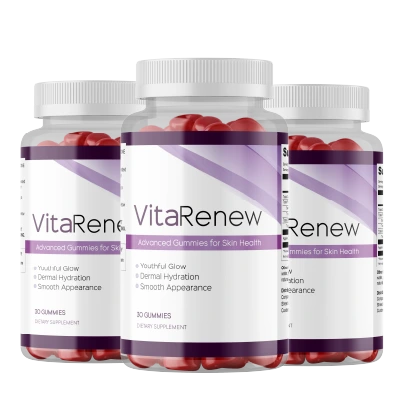
I started taking VitaRenew — a daily gummy formulated with vitamin C, zinc, and copper — not instead of the dietary changes but alongside them. As a backstop for the days when my copper intake was going to be near zero regardless of what I intended. The gummy format meant I actually took it. And having it meant the cofactor supply was consistent even when my diet wasn't.
I want to be clear: food first is the right frame. The dietary changes I made were real and worth making. But a targeted supplement that covers exactly the three cofactors the process depends on is a rational complement — not a replacement for eating well, but a way to close the gaps that food alone doesn't reliably fill.
What I use alongside the dietary changes
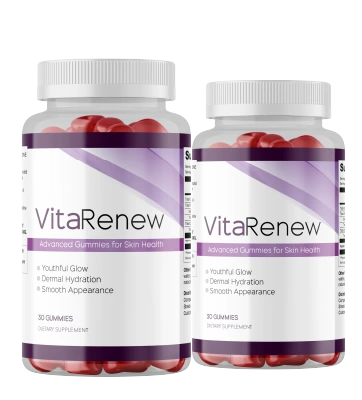
VitaRenew
Vitamin C, copper, and zinc in a once-daily gummy. Formulated for women 40+. Made in an FDA-registered, GMP-certified facility.
The three cofactors together — for the days when the diet isn't perfect.
60-day money-back guarantee · One-time purchase, no subscriptionWhat the timeline actually looked like
I won't pretend it was fast. The dermis works on its own schedule, and I had to learn patience with that. Here is roughly what happened over three months:
- Weeks 1–4: Surface texture looked better some days, especially when I was well hydrated. I wasn't sure if I was imagining it.
- Weeks 5–8: The skin on my upper arms felt noticeably different when I touched it — slightly more resistance, less like it was sitting loosely over the muscle underneath. Still subtle. But consistent across multiple days, not dependent on hydration.
- Weeks 9–12: My husband asked if I had changed something. That was the first external confirmation. The area on my chest that had bothered me the most — the upper sternum area where the texture had really settled in — was visibly smoother in direct light.
Three months to a noticeable change is the honest timeline. Dermal remodeling is not a fast process. The research that has actually measured it uses evaluation periods of eight to twelve weeks, and improvements continue to accumulate past that point when support is consistent.
What other readers have found
"I had been eating well for years but never specifically thought about copper. When I read Marion's piece I went and checked my actual diet. I was getting almost none. I made the same changes — cashews, sunflower seeds, more oysters — and added a daily supplement for consistency. About ten weeks in, the texture on my upper chest changed enough that I stopped covering it up with scarves. That felt big."
"I tried the collagen powder route for almost a year with no real change in the crepey texture. When I understood that amino acids aren't the limiting factor — the cofactors are — I switched approaches entirely. The dietary changes plus a daily gummy with the three cofactors made more of a difference in two months than the collagen powder made in twelve."
These are individual accounts. Results are not typical and will vary based on individual factors including age, baseline dermal structure, diet, and consistency of use. No supplement is intended to diagnose, treat, cure, or prevent any disease.
Product I reference above
VitaRenew
Vitamin C, zinc, and copper in one daily gummy. Formulated for women 40+. Made in an FDA-registered, GMP-certified facility. 60-day money-back guarantee. One-time purchase — no subscription.
Because some days the diet isn't perfect — and the dermis doesn't take days off.
60-day money-back guarantee · Supports skin, hair and nailsBackground reading
- Cosgrove MC et al. "Dietary nutrient intakes and skin-aging appearance among middle-aged American women." American Journal of Clinical Nutrition, 2007.
- Pullar JM, Carr AC, Vissers MCM. "The Roles of Vitamin C in Skin Health." Nutrients, 2017.
- Rucker RB et al. "Copper, lysyl oxidase, and extracellular matrix protein cross-linking." American Journal of Clinical Nutrition, 1998.
- Ogawa Y et al. "Zinc and skin disorders." Nutrients, 2018.
- Varani J et al. "Decreased collagen production in chronologically aged skin." American Journal of Pathology, 2006.