Why Your Hands Stay Dry and Crepey No Matter How Much You Moisturize


For a long time, I thought I was just not moisturizing enough. So I added a second application. Then a third. I kept a small bottle at the kitchen sink, another on my nightstand. And yet, every morning, the back of my hands still looked like crepe paper — dry at the joints, paper-thin when I pressed them together, the tendons and veins more visible than I remembered. Lotion would help for maybe an hour. Then that same tight, parched feeling came back.
If that sounds familiar, you're not alone. Dry, crepey hands are one of the most common complaints I hear from women after 40 — and one of the most frustrating, because the obvious fix (more moisturizer) just doesn't seem to work. That's because the cause isn't on the surface.
The problem is below the skin, not on top of it
The dryness you feel in your hands after 40 isn't caused by forgetting to moisturize. It's caused by two things happening inside the skin at the same time — and neither of them responds to anything you put on the surface.
The first is the loss of ceramides. Ceramides are lipid molecules that sit between the skin cells in the outermost layer, forming a barrier that holds water in. Think of them as the mortar between bricks — without enough mortar, water seeps out. Your skin naturally produces ceramides, but that production slows significantly with age. And hands are at a particular disadvantage: they have fewer oil-producing glands than the face, they're washed many times a day (which strips ceramides further), and they don't get the benefit of the SPF-moisturizer combos most women apply to their faces each morning.
The second is the loss of collagen. Collagen is the structural protein that gives skin its thickness and bounce. When you press the back of a younger hand and release, the skin springs back. When collagen has thinned, it creases, folds and stays there for a moment. This is what gives crepey skin its tissue-paper texture — not just dryness, but a loss of structural depth.
Why hands show it before the face
Here's something that surprises a lot of people: the skin on the back of your hands is thinner than facial skin to begin with. It has less subcutaneous fat, fewer sebaceous glands and no dedicated skincare routine protecting it. Most of us have been applying SPF, serums and moisturizers to our faces for years. Our hands get the same daily sun exposure — and almost none of that protection.
The result is that hands can start showing the visible signs of skin aging — dryness, thinning, crepey texture — several years before the face does. And once the skin has thinned at the structural level, surface moisturizers run into their limit: they work at the epidermis, but the collagen lives in the dermis below. No lotion crosses that boundary.
What lotion actually does (and doesn't do)
This is where the frustration comes from. Moisturizer absolutely does something — it helps slow water loss at the surface, and your hands feel temporarily softer. But it doesn't restore the ceramide-producing cells that have slowed down. And it doesn't reach the fibroblasts in the dermis that make collagen. So within an hour or two, as the surface moisture evaporates, you're back where you started: the structural dryness and thinning were never addressed.
This isn't an argument against moisturizing. It's an argument for also addressing what's happening beneath the surface — specifically, giving your skin the raw materials it needs from within.
What we suggest
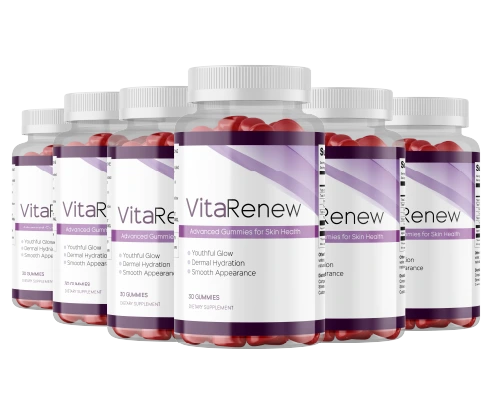
VitaRenew is a collagen-supporting supplement in gummy form designed to support skin structure and hydration from the inside. It combines collagen peptides with vitamins that may help support the skin's moisture barrier and dermis. The approach — nutritional support from within rather than topical patching — is the one that made sense to me once I understood what was actually causing the problem.
- May support healthy collagen levels in the skin
- Includes nutrients that support ceramide-producing cells
- Formulated for women 35–60
- 60-day money-back guarantee · No autoship
What women who've tried this approach are saying
"I'd basically given up on my hands and started just wearing them — hiding them in photos, tucking them under the table. Three months in and the texture is genuinely different. Less papery. I don't think about hiding them as much."
"My hands were the driest part of me even though I moisturized constantly. A friend recommended looking into collagen supplements and I found VitaRenew through her. It's the first thing that actually changed how my hands feel by midday, not just right after I apply something."
These statements reflect individual experiences. Results are not typical and will vary from person to person.
If you've been blaming yourself for not moisturizing enough
You're not doing it wrong. Moisturizer is a surface tool for a below-the-surface problem. The dryness and crepey texture on your hands after 40 has structural causes — ceramide loss that slows your skin's ability to hold water, and collagen loss that thins the skin itself. Addressing those from within, rather than trying to patch the surface indefinitely, is where I'd focus next. VitaRenew is where I started.