Health & Wellness
What Causes Crepey Skin on Your Shoulders After 40?
My face looked fine. I had been careful about that for years. But a photo from last summer showed me something I had not been watching — and I spent the next few months figuring out why it happens there, of all places.

It was a photo from a graduation party — my niece's. I was wearing a sleeveless dress I love, and in the photo my face looked perfectly fine. My shoulders, though. Through the strap of the dress, you could see it clearly: a thin, papery texture across the cap of each shoulder, like the skin had lost its smooth surface without my noticing.
I had been putting sunscreen on my face every morning for twelve years. I moisturized, I stayed hydrated. The shoulders — I had not been watching the shoulders. And apparently they had been quietly changing for quite a while before that photograph told me.
I spent a few months reading everything I could find about why it happens there specifically, and what — if anything — you can actually do about it. Here is what I learned.
Why the shoulders are the first to show it
When I started looking into this, I expected the answer to be about moisturizing — not doing enough of it, or using the wrong kind. That turned out to be completely wrong. The texture you see on the shoulders is not a surface problem. It comes from what's happening much deeper in the skin, in a layer called the dermis, which is below anything a lotion can reach.
The dermis contains two proteins that give skin its structure: collagen, which provides thickness and the feeling of fullness, and elastin, which is responsible for the snap-back quality — the skin's ability to return to its original shape after being moved or stretched. When you see fine, papery wrinkling that crumples when you lift your arm and settles slowly, that's these two proteins showing their age in that tissue.
But why the shoulders first? Because the shoulder is, for most of us, one of the spots on our bodies that has received the least protection from the sun over the years. We take care of our faces. We sometimes reach the neck. The shoulders, especially the back of them — those get a lot of sun exposure, especially in summer, often without any sunscreen at all. That UV exposure accelerates the breakdown of the structural proteins in the dermis in a way that nothing topical touches, because it happens below the surface.
The sun adds up — and then age adds its own layer on top
Here is the part that surprised me most: the shoulders are dealing with two separate processes at once, not just one.
The first is what I just described — cumulative UV damage that has been adding up over decades, specifically in that exposed tissue. Ultraviolet radiation triggers enzymes that break down collagen and elastin, and on the shoulders, those enzymes have had a lot of years to work.
The second process is something that happens to everyone after 40, regardless of sun exposure: a decline in the body's ability to maintain dermal collagen. Collagen production decreases gradually from your mid-twenties, but what changes significantly in the early forties is the hormonal component. Estrogen plays an active role in keeping the skin's collagen-producing cells working efficiently. As estrogen levels drop through perimenopause, that support weakens — and the rate of collagen loss accelerates beyond the gradual background decline.
What that means for the shoulders specifically: they're dealing with the local UV damage that has been accumulating there for thirty years, and they're also dealing with the systemic collagen decline that affects all skin after 40. Both hitting the same tissue at the same time. That's why changes show up there earlier than in areas that were protected from the sun.
The shoulders were never the priority. The face was. And while you were taking care of your face, the shoulders were sitting in the sun without SPF, for decades. The combination of that history and the changes after 40 is exactly why this area signals it first.
What actually limits the skin's ability to maintain itself
For a long time, I thought the answer was collagen supplements — taking collagen peptides to give the body more raw material. I tried this for about eight months. I couldn't honestly say I noticed a change in my shoulders.
When I started looking more carefully into the research, I came across something that shifted my thinking: the problem isn't usually a shortage of the raw materials for collagen. In most well-nourished adults, the body has enough amino acids to build collagen. What it needs is the enzymatic support to actually assemble it correctly — and that depends on specific micronutrients that most of us aren't getting in the quantities the process requires.
The three that came up consistently in what I read:
- Vitamin C is essential for the enzymes that stabilize newly made collagen into its final structure. Without enough vitamin C, collagen gets built but then breaks down quickly before it can do anything useful. This isn't obscure science — it's exactly why sailors used to get scurvy. The connective tissue deteriorates when vitamin C is insufficient.
- Copper activates the enzyme that weaves individual collagen and elastin fibers into a working network. You can have all the fibers, but without copper, they don't get assembled into structure. This is the piece I had never heard of before, and it's the one that's most often missing from the supplements I'd seen on shelves.
- Zinc helps regulate the process that breaks collagen down — the same process that UV exposure accelerates. Having adequate zinc on board may support a healthier balance between breakdown and maintenance.
I had been taking collagen peptides — building blocks. What I hadn't been paying attention to was whether the enzymatic assembly process had what it needed to actually work. Those are very different questions.
What I started using
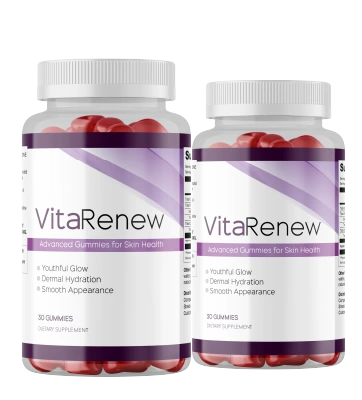
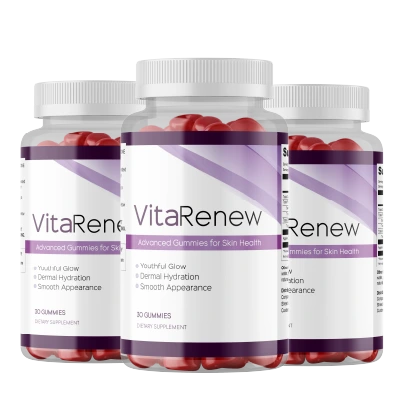
VitaRenew
Vitamin C, zinc and copper in one daily gummy — the trio of cofactors the skin's structural maintenance process actually depends on. Made for women 40+.
The building blocks weren't the problem. It was the assembly process all along.
60-day money-back guarantee · One-time purchase, no subscriptionWhat I looked for and what helped me decide
Once I understood what to look for, I started paying attention to what was actually in the supplements I was considering. Most of them — the popular collagen powders and capsules — focused almost entirely on collagen peptides. Some had vitamin C added. Very few had copper. Even fewer explained why copper matters.
A few things I learned to prioritize when evaluating:
What to actually look for
- Copper — the step most products skip. If a supplement doesn't include copper alongside zinc, it's leaving out the piece that enables structural cross-linking. Without it, the process is incomplete regardless of what else is there.
- Vitamin C at a real dose. Not a token amount added for the label — enough to actually support the enzymatic steps that stabilize collagen after synthesis.
- A long enough guarantee window. The dermis takes time to respond to anything. A 30-day return window says the company isn't confident in results inside an honest evaluation period. I looked for 60 days minimum.
- No dramatic timelines. Any company promising visible results in two weeks is not being honest with you. Real dermal changes take months. That honesty, or the lack of it, tells you something about the product before you even open it.
- Verified manufacturing. FDA-registered facility and GMP certification as a baseline. These aren't just buzzwords — they're the difference between a product that contains what the label says and one that may not.
Being realistic about the timeline
I want to be honest about expectations, because I wasted time before I had realistic ones. The outermost layer of skin turns over about every four to six weeks — so some change in tone or surface texture can begin to show in that window. But the dermis, where the structural proteins live, is much slower. The studies I found that showed real results used evaluation periods of eight to twelve weeks, not two.
I took a photograph of my shoulders at the start. I evaluated over three months, consistently. I noticed a change in the texture — less papery in photos, less visible crumpling when I raised my arm. It wasn't a transformation, and I'm not going to pretend it was. But it was enough of a change that I've kept going. The shoulders that made me flinch at that graduation photo look different now.
What other women have experienced
"I honestly thought I was too far gone to notice a difference. The skin on my shoulders and the top of my chest was really crepey — I had been avoiding anything sleeveless for two summers. About nine weeks into focusing on the cofactor approach, my daughter asked me if I'd been doing something different because I looked better. I told her I'd finally figured out the right question to ask."
"I noticed the shoulders first because I had a wedding to go to and nothing with sleeves fit the dress code. I started the cofactor supplement two months before and honestly wasn't expecting much. The skin wasn't perfect for the wedding, but it was noticeably better than the previous year. I could see it in the photos. I've continued since."
These are individual accounts. Results are not typical and vary based on individual factors including age, sun history, diet, and consistency of use. No supplement is intended to diagnose, treat, cure, or prevent any disease.
Product referenced above
VitaRenew
Vitamin C, zinc and copper in one daily gummy. Made in an FDA-registered, GMP-certified facility. 60-day money-back guarantee. One-time purchase — no subscription.
For the skin you stopped watching, that was watching the sun the whole time.
60-day money-back guarantee · Supports skin, hair and nailsBackground reading
- Thornton MJ. "Estrogens and aging skin." Dermato-Endocrinology, 2013.
- Pullar JM, Carr AC, Vissers MCM. "The Roles of Vitamin C in Skin Health." Nutrients, 2017.
- Rucker RB et al. "Copper, lysyl oxidase, and extracellular matrix protein cross-linking." American Journal of Clinical Nutrition, 1998.
- Fisher GJ et al. "Pathophysiology of premature skin aging induced by ultraviolet light." New England Journal of Medicine, 1997.
- Ogawa Y et al. "Zinc and skin disorders." Nutrients, 2018.