Why Your Hands Get That Thin, Crepey Skin Before Everything Else — And What Changed for Me


I was reaching for something on a high shelf — my arm extended, natural light coming through the window — when I caught a clear view of the back of my hand. The skin looked thin. Papery, almost. Fine lines gathered between the knuckles in a way I hadn't noticed before. And when I lowered my arm and looked more carefully, I could see the texture clearly: delicate and soft in a way that reminded me of crepe paper. The word, I later looked up, is crepey.
What struck me was that I'd spent three years being diligent about my face. SPF every morning, retinol at night, a decent vitamin C serum in between. I thought I was on top of it. But my hands — in full sun every time I drove anywhere, every time I gardened, every time I walked to get the mail — had received essentially nothing. No sunscreen, no targeted care. And they looked it.
The part I hadn't considered: hands age differently
When I started researching, the first thing I found was that crepey skin on the hands isn't just about dryness or neglect. It's structural — and the structure of hand skin makes it particularly vulnerable to this kind of change.
The back of the hand has very thin skin to begin with. Less collagen reserve, less fat underneath, and fewer oil glands than most areas. There's almost no cushioning layer between the skin and the tendons and veins below. So when the dermal structure starts to thin — which it does for everyone over time — the results show up on the hands faster and more dramatically than somewhere with more margin.
Add to that the fact that hands are among the most sun-exposed parts of the body. I drive every day. Both hands are on the wheel, in direct UV light, without any protection. Multiply that by twenty years of driving and the cumulative exposure becomes enormous — and UV is one of the most reliable accelerators of collagen degradation that exists.
Why I'd been thinking about this wrong
My instinct was to buy a richer hand cream. I tried two. They helped for a while — the skin looked softer, more hydrated. An hour later it looked the same as before. That experience told me something: this wasn't a surface moisture problem. A cream that sits in the outermost skin layer can't fix something that's happening in the dermis below it.
What I eventually understood is that the thin, crepey texture happens because the structural proteins in the dermis — collagen and elastin — are being produced more slowly and degraded more quickly. Your body still has the machinery to make these proteins. But the machinery depends on specific nutrients to run properly.
Vitamin C, for example, isn't just an antioxidant. It's a required cofactor for the enzymes that give collagen its stable structure. Without it, collagen is assembled in a weaker form. Copper is needed for the enzyme that cross-links collagen and elastin fibers into a proper network — without it, the fibers are made but not organized. Zinc and certain other micronutrients protect what's already there from damage.
I'd never framed skin as a nutrition question before. But once I understood the mechanism, it made immediate sense that adding cream to the outside wasn't solving the problem on the inside.
What I started using — and what I'd suggest looking into
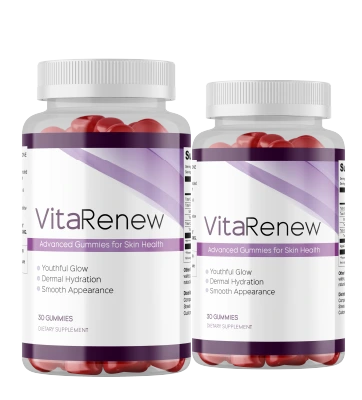
After reading about the cofactor side of collagen production, I started looking for something that addressed those specific gaps. What I tried — and kept — was VitaRenew, a daily collagen-support gummy made for women 40 and over. The idea isn't to flood your body with collagen powder; it's to provide the micronutrients that your fibroblasts need to produce collagen properly themselves.
- Vitamin C & copper — the two cofactors most directly tied to how well your body assembles and organizes new collagen
- Zinc & antioxidant support — for ongoing skin health and protecting existing structural proteins
- Daily gummy format — I added it next to my coffee in the morning and have honestly not missed a day
It's a supplement, not a magic fix. My hands aren't the hands of a 30-year-old. But after about six weeks I noticed the texture felt different — less papery when I touched the back of my hand, and the fine lines between my knuckles looked less pronounced. That was enough for me to keep going.
What other women are noticing
"I've been self-conscious about my hands for years — they always looked older than the rest of me. About two months in I realized I wasn't hiding them as much. The texture is genuinely smoother."
"My daughter commented that my hands looked different — younger is what she said. I told her I'd changed supplements. She immediately asked me to send her the link."
These statements reflect individual experiences. Results are not typical and will vary from person to person.
If your hands are the part that bothers you most
I know from talking to friends that hands are often the thing women notice and don't talk about. We compare our faces, we discuss serums and SPF. But a lot of us are looking at our hands and feeling like they've gotten away from us — thin, crepey skin that no lotion seems to touch. If that's where you are, I'd say the approach that finally made sense to me was getting below the surface: supporting the nutritional environment that makes skin structure in the first place, rather than trying to smooth over what's already changed. VitaRenew is where I'd start.