Personal Health · Real Experience
Why the Skin on Your Forearms Turns Crepey After 40
I moisturized every morning and night for two years. I drank my water. I bought the serums people recommended. And by 44, the skin on my inner forearms still looked like tissue paper that had been crumpled up and smoothed back out.

The moment I really noticed it was leaning on the kitchen counter one morning, waiting for coffee. I glanced down at my forearm resting against the granite and there it was — a soft, finely crinkled texture along the inner arm that the light was catching. Not a wrinkle. More like the skin had thinned out and lost whatever was holding it smooth underneath.
My first thought was that I was dehydrated. My second was that I needed a better moisturizer. For the next few months, I tried both approaches harder. More water. Richer creams. A hyaluronic acid serum someone from a skincare forum swore by.
Nothing changed. The texture was there every time I looked.
It took sitting down with the actual research to understand why — and the answer is one I wish I'd had earlier, because it completely changes what's worth doing about it.
The problem I was misdiagnosing
When skin looks dry or rough, the instinct is to add moisture to the surface — drink more water, apply more cream. That logic works for a specific kind of dryness: surface dehydration, where the outermost barrier layer has lost water and needs replenishment.
But crepey skin on the forearms isn't a surface problem. The skin that's behaving strangely — that thin, slightly crumpled quality, that tendency to hold a crease when you cross your arms — isn't coming from the barrier layer. It's coming from the layer below it.
The dermis — the deep structural layer beneath the skin's surface — is where two proteins do the mechanical work of keeping skin looking the way it does:
- Collagen is the scaffolding. It provides the thickness, the cushion, the gentle resistance you feel when you press your fingertip into the back of your hand. When collagen density is high, skin has volume and structure. When it falls, skin thins.
- Elastin is the spring. It lets skin deform when it moves and snap back into place. When you pinch the skin on your forearm and release it, the speed of that return is a measure of elastin function. Skin that holds a fold, that settles slowly back, is showing you what reduced elastin function looks like.
What I was seeing on my inner forearm was the surface expression of changes happening in this deeper layer. And no moisturizer reaches there — the dermis is below the address that topical products can access. That's not a criticism of moisturizers. They do what they're designed to do. The issue is that the problem and the solution had different addresses.
I wasn't failing at my skincare routine. I was applying the solution to the wrong layer.
Why it shows up on the forearm
I'd expected any visible aging to show on my face first. What surprised me was that my face looked fine — and my inner forearms didn't. This is actually pretty common, and there's a reason for it.
The inner forearm has thinner skin than the face. It's also not an area you apply sunscreen to every morning, but unlike the back of the hand, it doesn't get constant direct sun either — so UV damage isn't the dominant explanation. What shows there is a purer signal of the structural changes happening throughout the dermis.
It's also a location that catches light differently. When you rest your forearm on a desk, or cross your arms in conversation, the inner arm gets lit from the side — raking light, which shows texture in everything. That's why the forearm can look fine in a dim room and very apparent in afternoon light at the right angle. The texture hasn't changed. The light has.
Once I understood this, I stopped blaming myself for what I was seeing. The inner forearm is an honest early indicator — not a verdict.
What actually happens after 40
From the mid-twenties onward, collagen production gradually declines — roughly one percent per year is the figure that comes up in the literature. For most of the thirties, that pace is slow enough that the change stays invisible. The margin between what's being produced and what the skin needs is still wide enough that nothing shows.
What changes in the forties — particularly for women — is that a second process arrives on top of the first. Estrogen actively supports dermal collagen throughout the reproductive years. It upregulates the fibroblast cells that make collagen and suppresses the enzymes that break it down. As estrogen levels decline through perimenopause, both of those protections weaken at once.
Some research has documented that a meaningful proportion of dermal collagen can be lost in the period surrounding menopause — accelerated loss, on top of the steady background decline that's already been running for fifteen years. Two slopes arriving together. That intersection is why it can feel sudden when it actually wasn't.
This is not a failure of care. It's a biological process that no moisturizer, no water intake, no topical routine was ever designed to address. Once I accepted that, I could start asking the right question: what can actually support the structural layer?
What I tried after understanding this
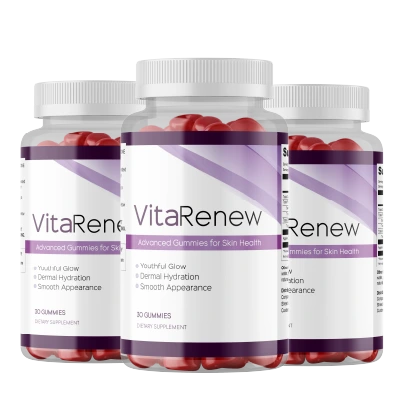
VitaRenew
The cofactors your skin's structural maintenance actually needs — vitamin C, zinc and copper — in one daily gummy designed for women 40+.
Not a quick fix. The inputs the dermis depends on, taken consistently.
60-day money-back guarantee · One-time purchase, no subscriptionWhat the body still needs to do its job
Here's what I didn't know before I started researching: the body doesn't stop producing collagen in your forties. The fibroblast cells responsible for synthesis are still there. The process is still running. What changes is how efficiently it completes — and that depends on whether certain inputs are available.
Three nutrients sit at load-bearing positions in collagen synthesis:
- Vitamin C is required by two enzymes — prolyl hydroxylase and lysyl hydroxylase — that stabilize newly formed collagen chains into their functional structure. Without adequate vitamin C, collagen can be synthesized in a structurally weak form that degrades quickly. This is documented biochemistry, not marketing copy.
- Copper activates lysyl oxidase, the enzyme that physically cross-links individual collagen and elastin fibers into a dense, interconnected network. You can have all the collagen fibers you need; copper is what assembles them into load-bearing structure. It's the most commonly left-out ingredient in skin supplements, despite being critical to the step that makes structure.
- Zinc supports skin cell turnover and the continuous maintenance processes that run in the dermis. It also helps modulate the enzymes that break collagen down.
Before I understood this, I was taking collagen peptide powders — raw amino acids. The research on those is real but modest. In a well-nourished adult, raw amino acid supply usually isn't the bottleneck. The enzymatic steps are — and those depend on vitamin C, copper, and zinc being available in meaningful quantities.
What to look for and what to ignore
My working checklist
- Vitamin C in a real quantity. Not a trace added to the label — a dose that could actually support the enzymes that do structural work.
- Zinc and copper, both. They operate at different steps of the same process. Most formulas include zinc; far fewer include copper. The absence of copper is usually the missing piece.
- A guarantee of 60 days minimum. Dermal remodelling takes months. A 30-day guarantee tells you the company doesn't expect results within any useful evaluation window.
- FDA-registered, GMP-certified manufacturing. Third-party testing is a positive signal on top of that.
- Realistic marketing. Anything claiming visible results in days or weeks is telling you something about the marketing — not the product.
On timeline: what to actually expect
The outer skin layer turns over every four to six weeks, so some surface improvements — tone, texture at the barrier level — can show in that window. The dermis is slower. Collagen remodelling is a months-long process, which is why well-run clinical studies use eight- to twelve-week windows to evaluate skin supplements.
I took a photo of my inner forearm in natural morning light the day I started. I looked again at twelve weeks. The change I noticed wasn't dramatic — this isn't a transformation story. But the texture was different. Less papery in that same raking afternoon light that had originally made me look twice. I kept going.
Give any intervention three full months and consistent natural lighting for your comparison photos. Variables like sleep, sun history, and diet all matter — no supplement overrides those. But consistently supporting the machinery that runs the process, over time, is how the accumulation happens.
What others have found
"I have to be honest — I was skeptical. I'd tried collagen powders, vitamin C serums, all of it. The thing that got me was the 60-day guarantee. Nothing to lose. By week ten I took a photo and actually sat there comparing it for a few minutes. The skin on my lower arm doesn't have that dry crinkle anymore when I look at it in morning light."
"My sister mentioned the cofactor approach after she'd been doing it for a while. I started in January. By April I noticed my arms looked different — not transformed, but more like they did in my late thirties. My arms were always the part of me I tried not to look at. That's changed."
These are individual accounts. Results are not typical and vary considerably based on individual factors including age, sun history, diet, sleep, and consistency of use. No supplement is intended to diagnose, treat, cure, or prevent any disease.
What I recommend based on this
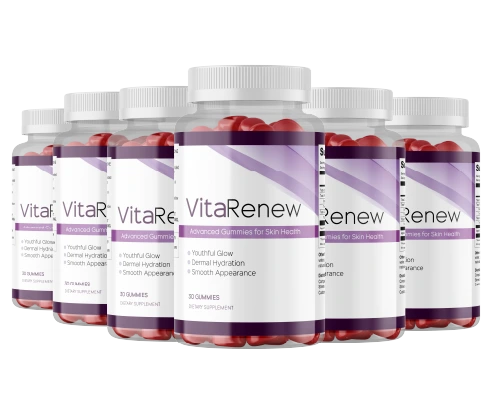
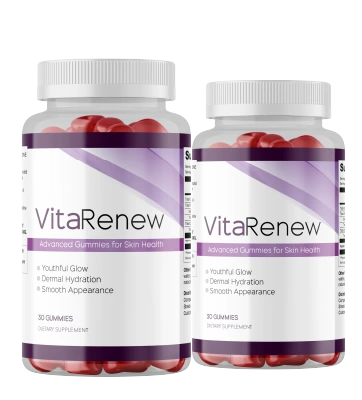
VitaRenew
Vitamin C, zinc and copper — the cofactors that support structural maintenance — in one daily gummy. FDA-registered facility, GMP certified. 60-day guarantee. One-time purchase, no subscription.
Start with the 2-bottle supply. That's one full evaluation window.
60-day money-back guarantee · Supports skin, hair and nailsBackground reading
- Pullar JM, Carr AC, Vissers MCM. "The Roles of Vitamin C in Skin Health." Nutrients, 2017.
- Rucker RB et al. "Copper, lysyl oxidase, and extracellular matrix protein cross-linking." American Journal of Clinical Nutrition, 1998.
- Thornton MJ. "Estrogens and aging skin." Dermato-Endocrinology, 2013.
- Diehl KC et al. "Morphological and functional aspects of skin aging." Clinics in Dermatology, 2020.
- Ogawa Y et al. "Zinc and skin disorders." Nutrients, 2018.