Skin & Body · Personal Experience
I Finally Figured Out Why My Elbows Look Crepey (It Wasn’t Dryness)
For two years I kept reaching for arm cream every time I noticed the fold at my inner elbow and the papery outer cap. It was the wrong response to a problem I didn’t fully understand yet.

I first really noticed it on a video call. I was leaning my chin on my hand — the kind of thing you do without thinking — and when I looked at my arm in the small preview window, I could see a fold at the inner elbow that I didn’t recognise. Not a bruise, not a shadow. Just a crinkle, like thin paper, at the bend of my arm. I was 44.
Over the following weeks I started paying attention to what was happening at the elbow more generally. The inner fold was there whenever I bent my arm — obvious, accordion-like. And when I extended my arm fully, there was still a slight crease where once the skin had just been smooth. Then I noticed the outer elbow cap separately: ashy, tissue-thin, rough in a way that moisturiser didn’t fix. If I rested my elbow on a table for any length of time it looked worse by the time I stood up.
I bought a firming arm lotion. Then a different one. A body cream with retinol. An overnight treatment oil. I used them faithfully. After several months the skin was certainly more moisturised — which did soften the look of the surface texture slightly — but the structural quality of the skin at the elbow had not changed. The fold was still there. The outer cap was still papery. I was treating a surface symptom with surface products, and the biology didn’t care.
What I eventually learned about what’s actually happening
I came to understand the elbow differently after reading about the structure of aging skin — specifically about collagen and the enzymatic processes that build and maintain it. What I hadn’t understood was that the elbows are not just “any arm skin.” They’re two structurally distinct sites, each with its own reason to age visibly in midlife.
The inner elbow — the crease — is one of the most mechanically stressed pieces of skin on the body. Every time you bend your arm, that skin folds on itself at an extreme angle. Every time you straighten it, it has to snap back. This happens continuously, every day, for decades. Younger skin handles this without complaint because the collagen and elastin scaffold in the dermis is intact and well-maintained. The scaffold deforms under load and recovers its shape because it has the structural organisation to do so.
What happens after 40 is that the collagen synthesis rate — which has been declining very slowly since the mid-twenties — falls enough that the mechanical wear on the scaffold begins to outpace the repair. The organised collagen network loses its recovery capacity. The skin that used to snap back instead stays partly folded. That’s the accordion crease. It’s not dryness. It’s a structural failure in the collagen network at the most-used skin hinge in the upper body.
The outer elbow is a different story. The skin there sits on bone — almost no subcutaneous fat beneath it to provide volume and support. And unlike the inner arm, the outer elbow gets real sun exposure year-round: through short sleeves, while driving, outdoors. UV breaks down collagen and elastin fibres in the dermis through oxidative damage. Most people don’t apply sunscreen to their outer elbows as a daily habit. So that thin, minimally-supported skin has been absorbing decades of UV load without protection. The ashy, tissue-paper quality of the outer elbow cap is what you get when you combine a thin dermal scaffold with long-term UV exposure.
Two problems on the same joint, two different pathways — but both trace back to the same question: what does the skin at the elbow need internally to maintain the scaffold that’s being degraded?
The internal cofactor angle I’d completely missed
The thing that changed my thinking was learning about cofactors. The collagen your skin produces is built through a chain of enzymatic reactions inside fibroblast cells in the dermis. That chain doesn’t just need protein — it needs specific molecules to function. Two of them I’d genuinely never thought about in the context of skin.
The first is copper. Before individual collagen strands can be knitted into the cross-linked, load-bearing network that makes up the actual scaffold, an enzyme called lysyl oxidase has to cross-link them together. Lysyl oxidase requires copper to function. Without copper, you get individual collagen strands that can’t organise into structural mesh. They degrade before they do anything useful. Nearly every skin supplement I’d looked at contained zinc — which does something different, regulating collagen turnover — but omitted copper entirely. I had been taking a collagen supplement for several months that had no copper in it at all. The cross-linking step was going unaddressed.
The second is vitamin C, which I had associated mostly with immune function and not with skin. But vitamin C is the cofactor for the enzymes that hydroxylate the proline and lysine residues in the procollagen chain — a step that has to happen before the chain can fold into the triple helix that gives collagen its shape. Without adequate vitamin C supply to the fibroblast, the collagen strands produced are structurally incomplete. It turns out that the skin’s ability to produce functional collagen — not just any collagen, but stable, triple-helical, scaffold-worthy collagen — depends heavily on consistent vitamin C supply. Not occasional. Consistent.
For the outer elbow cap, where UV oxidative damage is part of the picture, I also learned that vitamin E and selenium work together as an antioxidant pair in the dermis — intercepting the reactive oxygen species that UV generates before they fragment existing fibres. They work through different pathways and the research on dermal oxidative stress tends to cite them as a combination, not as alternatives. A supplement that has one and not the other is only covering part of the mechanism.
What I use
VitaRenew
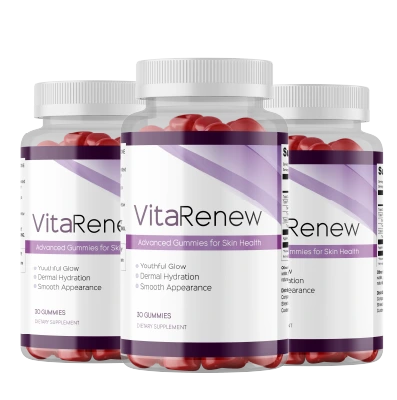
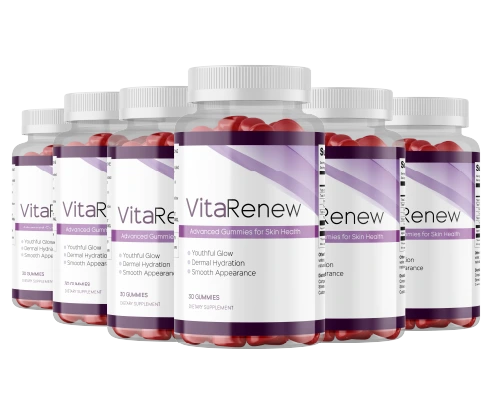
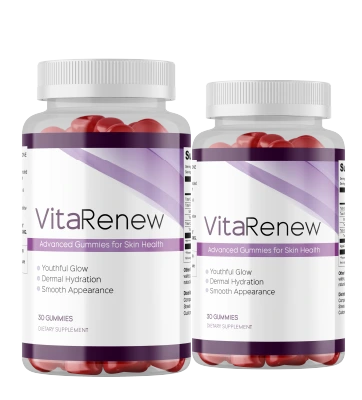
Vitamin C, copper, zinc, vitamin E, selenium and beta-carotene — the full cofactor profile for collagen synthesis and fibre protection, in a daily gummy.
I started with the 2-bottle supply. Sixty days is the minimum you need to give the biology a fair chance to respond.
60-day money-back guarantee · One-time purchase, no subscriptionWhat changed after I started addressing the right thing
After I understood the actual mechanism, I stopped looking for topical solutions and started looking for something that addressed the cofactor gap. I needed something with vitamin C at a meaningful dose — not a trace inclusion — plus copper alongside the zinc, and the vitamin E and selenium pair for the oxidative side.
VitaRenew had all of it in one formula. Vitamin C, copper, zinc, vitamin E, selenium, and beta-carotene in a daily gummy. No subscription, one-time purchase. Backed by a 60-day guarantee that actually made sense given what the research says about collagen remodelling timelines (eight to twelve weeks is what clinical dermatology measures). I started with the 2-bottle supply — 60 days — which felt like a fair trial.
The first thing I noticed, around week six, was the surface quality of the skin on my arms generally. The outer elbow cap started looking less ashy. The rough, tissue-paper texture softened. I’d been attributing that to the moisturiser I was still using — but I tested it over a few days by not moisturising and the improvement held. Something was different beneath the surface.
By week nine, the inner elbow crease had visibly changed. The accordion fold when I bent my arm was less deep. When I extended my arm fully, the crease that had been visible for two years was much less prominent. The skin at the crease was recovering more quickly after being folded. It wasn’t gone — I want to be accurate about that — but the quality of what happened when I bent my arm and then straightened it was noticeably different.
I have continued with a second supply. The changes held through the summer and are more pronounced now than at week nine. I cannot tell you what the outcome will be for you, because individual variation in collagen turnover rate, hormonal status, UV history, and baseline nutrition is real and significant. What I can tell you is that two years of arm lotions produced no structural change, and addressing the internal cofactor picture produced a change I can see and measure.
On what “supports firm, healthy-looking skin” actually means: VitaRenew is a supplement. It supports the skin’s natural collagen synthesis process by providing the cofactors that process requires. It is not a treatment for any condition, it has not been evaluated by the FDA for any disease claim, and it is not intended to diagnose, treat, cure, or prevent anything. What I experienced was a change in how my skin looked and felt over several months of consistent use. That’s what I’m reporting — not a medical claim.
Why topical products couldn’t do what I needed
I want to be fair to the arm creams I used, because they weren’t without benefit. Good body moisturiser improves the surface hydration and pliability of skin — and that does reduce the visual prominence of fine surface texture when the skin is well-moisturised. If you don’t currently moisturise, adding a good cream to your routine will make a visible difference to surface texture.
The structural ceiling is set by biology. The stratum corneum — the outer layer of the skin — restricts what molecules can penetrate to the dermis below. Collagen molecules are far too large to pass through; they stay at the surface. Retinol has the most evidence for sub-surface activity of any topical ingredient, and even it primarily affects the dermal-epidermal junction rather than the deep dermis where the scaffold is built. The cofactors the collagen synthesis machinery needs — vitamin C for hydroxylation, copper for cross-linking — reach the fibroblast through the bloodstream, not through the skin surface. No topical formulation can substitute for that delivery route.
The inner elbow crease reflects a mechanical problem in the mid-dermis. The outer elbow cap reflects an oxidative and structural problem in the dermis and sub-dermis. Both originate inside the tissue, deeper than any topical product can consistently reach at therapeutically relevant concentrations. Moisturiser takes care of the surface — and I still use it — but it was never going to address what I was actually looking at in that video call.
What I now tell anyone who asks about crepey elbow skin
If you notice the accordion fold at your inner elbow, or the ashy papery texture at the outer elbow cap, and arm creams aren’t making a structural difference — it’s probably not a surface problem. The elbow is mechanically demanding in a way most arm skin is not, and the outer cap has UV exposure that most covered skin does not. Both point toward the same underlying question: is the collagen synthesis process getting what it needs internally?
For me, the answer was that it wasn’t — specifically that copper and a meaningful dose of vitamin C were missing from what I was doing. Adding those, alongside the antioxidant pair of vitamin E and selenium for the UV-exposed outer cap, was the change that made a difference. VitaRenew gave me all of it in one place, and sixty days gave the biology time to actually respond.
"I had the same inner elbow fold Marion describes — it appeared around 43 and just stayed. I had tried a retinol body cream and a firming lotion with no structural change. I started VitaRenew in March and by mid-May the fold at the crease was noticeably shallower when my arm was extended. The outer elbow cap also looks much less papery and dry. The combination of changes surprised me — I was only expecting one or the other."
— Sandra B., 45, verified purchaser
"I saw the crepey crinkle at my inner elbow for the first time on a video call — exactly like this article describes. I was 46. I researched for a while before I found anything that made mechanical sense to me and addressed the cofactor angle specifically. I’ve been on VitaRenew for four months. The accordion fold inside my elbow when I bend my arm is much less deep, and the outer elbow skin is noticeably less ashy and thin-looking. I’m on my third supply."
— Diane M., 47, verified purchaser
Individual results vary. These testimonials represent personal experiences and may not reflect typical outcomes.
Product I use
VitaRenew
The full cofactor formula for skin, hair and nails — vitamin C, copper, zinc, vitamin E, selenium and beta-carotene. FDA-registered facility, no subscription, ships from the US.
Start with the 2-bottle option and give it the full 60 days. That’s the window the biology needs.
60-day money-back guarantee · No subscription · Ships from the US