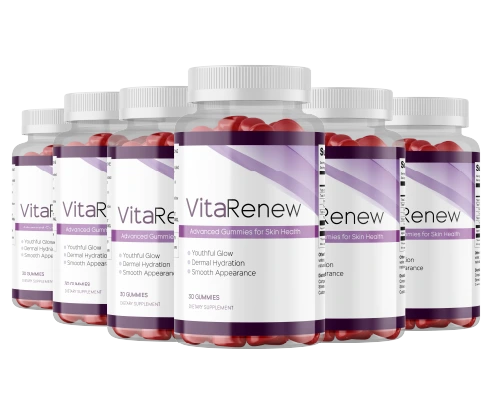
Skin Health · Explainer
Crepey Skin on the Chin — Why It Shows Up There First and What Actually Supports It
Most women notice it in a phone camera before they notice it in a mirror. That’s not an accident — it’s anatomy.

There is a camera angle that has become impossible to avoid. It happens when you take a photo with your phone resting flat on the table. When you FaceTime someone and your laptop sits lower than eye level. When you lean in to read something on a screen and the webcam is pointed up at you. The camera catches your face from below — and in that frame, at that angle, many women in their forties start seeing something they don’t see head-on.
Under the chin, along the jaw: skin with a texture that wasn’t there a few years ago. Not a wrinkle, exactly. Something more diffuse. Thin. A little loose. The texture that gets described, always, as crepey.
If that angle is where you first noticed it, there’s a biological reason — and it has nothing to do with how well you’ve been taking care of your skin.
The chin and jawline often show crepey texture earlier than the cheeks or forehead. Not because of neglect — because of where they sit in the anatomy of skin change after 40.
The angle that shows it first
Cameras don’t lie, but they do show you things that straight-on mirrors conceal. When you look into a bathroom mirror at eye level, the skin under your chin is compressed and foreshortened. When a camera looks up at you, that same skin is pulled gently downward and away — the angle that makes texture visible.
There’s also an anatomical reason this area shows changes early. The skin along the chin and jawline is in near-constant motion: every word you speak, every bite you chew, every smile, every swallow. That mechanical repetition puts a particular kind of load on the collagen structure underneath. And the skin here is thinner to begin with than on the cheeks or forehead, which means structural changes that happen everywhere start to show here first.
None of this is a verdict on how you’ve lived. Women who use SPF daily, sleep eight hours and drink their water get this texture too. It is a structural shift, not a surface failure.
What’s actually changing after 40
Underneath the skin you can touch is a layer called the dermis — a mesh of collagen fibres, elastin, and water-binding molecules that give skin its thickness, firmness and ability to spring back.
Crepey skin is what the outside looks like when that mesh starts to thin. Collagen production declines gradually from the mid-twenties: about one percent a year, slow enough that most women don’t notice it in their thirties. But two things accelerate the change in the forties.
The first is that the gradual decline has had twenty-plus years to accumulate. The second is estrogen. As estrogen levels fall during perimenopause, dermal collagen loss speeds up sharply. Research has found that a substantial portion of skin collagen can be lost in the years surrounding menopause, on top of the background rate that was already underway. Two curves meeting is why it can feel abrupt, even though it wasn’t.
The chin and jaw area — thinner dermis plus high movement — reaches the visible threshold sooner than areas with more structural reserve.
Why moisturizer doesn’t reach it
Moisturizer genuinely helps crepey skin look better. It hydrates the surface layer, which plumps slightly and reflects light more evenly. That improvement is real — but it lasts a few hours, because nothing structural changed. Creams and serums act on the outermost layer of the skin; the dermis sits below the epidermis, beyond where topical products can reach in any meaningful way.
This isn’t a criticism of moisturizer. It does what it does well. But when the problem lives in the architecture below, working only on the surface has a fixed ceiling.
What actually supports the dermis from the inside
Your body hasn’t forgotten how to make collagen. The fibroblast cells that produce it are still in your dermis. What changes with age is the enzymatic machinery they depend on to do it well.
Two cofactors drive most of what the research points to:
- Vitamin C is a required cofactor for the enzymes that stabilize collagen molecules into their functional triple-helix structure. Without adequate vitamin C, collagen forms but in a structurally weak state. This is biochemistry, not marketing — it’s why severe vitamin C deficiency destroys connective tissue.
- Copper activates an enzyme called lysyl oxidase, which cross-links newly formed collagen and elastin fibres into the strong, springy network that gives skin its resistance. Without copper, fibres get made but don’t properly bind. Most skincare conversations skip copper entirely; the research doesn’t.
Zinc supports ongoing skin repair and works alongside both of the above. Together, these three are the enzymatic toolkit — the machinery the collagen assembly line runs on, as opposed to the raw material (amino acids) that most collagen supplements focus on.
That distinction matters. Adding more building material to a line that’s short on tools doesn’t increase output. When the bottleneck is enzymatic, the tools are what’s missing.
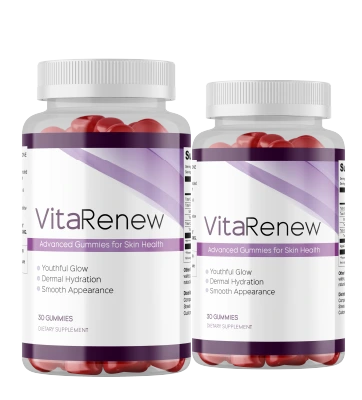
VitaRenew
A daily gummy built around the cofactor side of collagen synthesis — vitamin C, zinc and copper — with antioxidant support. Made in an FDA-registered, GMP-certified facility.
For the camera angle you’ve stopped trying to avoid.
60-day money-back guarantee · One-time purchase, no subscriptionWhat women say
The following reflect personal experiences. Results vary widely and are not typical.
“The FaceTime angle was what got me. I looked at myself on a call and barely recognized the skin under my jaw. Three months in on VitaRenew and I genuinely feel a difference — not dramatic, but real. The area is firmer when I touch it and the texture in photos has softened.”
“I started with the two-bottle option because sixty days felt like a fair enough test. By the second month I noticed my skin just felt different under my chin when I touched it. I’m on my third order now.”
These statements reflect individual experiences. Results are not typical and will vary based on age, genetics, diet, lifestyle, sun history, and other factors.
How long to give it
The collagen remodeling process happens over months, not weeks. The outermost layer of skin turns over in four to six weeks; the structural layer beneath it is slower. Most controlled studies of skin-directed supplements measure outcomes at eight to twelve weeks minimum.
A good approach: take a reference photo in the downward angle that showed you the issue in the first place — the phone-on-table or low-laptop shot. Evaluate at twelve weeks against that photo in the same lighting and angle. Expect gradual, not dramatic. Individual factors like baseline diet, sun history, genetics and starting estrogen levels all affect the rate of change.
VitaRenew
Vitamin C, zinc and copper in a daily gummy. Supports skin, hair and nails. Sixty-day money-back guarantee.
For the photograph you don’t want to crop.
60-day money-back guarantee · Supports skin, hair and nailsA note on context: the changes described here — gradual, affecting a wide area — are different from a spot or patch that suddenly changes appearance, shape, color or texture. The latter is a dermatologist’s question, not a supplement’s.