I Googled "Vitamin Deficiency Crepey Skin" — The Real Explanation Surprised Me


I'd been staring at my hands for a few weeks when I finally typed it into my phone: crepey skin on hands vitamin deficiency. It felt like a reasonable guess. The skin on the back of my hands had gone from normal to papery in a way that seemed to accelerate after 45, and I figured — like so many things — it was probably something I wasn't eating enough of. Vitamin C, maybe. Or vitamin E. Something fixable at the grocery store.
What I found was more interesting than that, and the path from "missing vitamin" to what actually helped took me through some skin biology I'd never thought about before. I'm sharing it here because I think a lot of women land on the same assumption I did, and I wish I'd had the clearer version of the explanation earlier.
The vitamin deficiency theory — where it comes from
The idea that vitamin deficiency causes crepey skin isn't entirely wrong. It's just incomplete in a way that sends most people chasing the wrong solution.
Here's what's accurate: certain vitamins are genuinely essential to how skin maintains its structure. Vitamin C is not just an antioxidant — it's a required cofactor for the enzymes that stabilize collagen. Without it, the collagen your body produces is assembled incorrectly and breaks down faster. That's the real mechanism behind scurvy, which most people know of historically but never connect to everyday skin health. Biotin and zinc matter too, for related but distinct reasons in the skin repair cycle.
So yes — if you are genuinely deficient in vitamin C, that will show up in your skin. The problem is: most women over 40 who are eating a reasonable diet aren't actually vitamin-deficient in the clinical sense. They're getting enough of these nutrients that scurvy isn't a concern. And yet their hands still look like mine did.
Which means the deficiency framing — as useful as it is as a starting point — doesn't tell the whole story.
What I actually learned about my hands
The deeper explanation, once I read past the simple vitamin-deficiency articles, has to do with how collagen production works as we age — and why the hands show it before anything else.
Your body's ability to make new collagen doesn't just disappear. The cells responsible for it — fibroblasts — remain active throughout your adult life. But the process of making collagen is enzymatic: a multi-step chain where each step requires specific cofactors to work properly. Vitamin C is one. Copper is another — it's needed for the enzyme that actually cross-links collagen and elastin fibers into the organized network that gives skin its structure and spring. Zinc comes into the picture for protective functions.
As we age, two things happen simultaneously. First, fibroblast activity slows — they're still there, just producing less. Second, and this is the part I hadn't considered: even when these enzymes are running, they need optimal cofactor availability to work well. So it's not that you're deficient. It's that the machinery is running slower, and every bottleneck in that chain shows up in the output: thinner, less organized dermal structure.
The hands are where this shows first because the skin there starts thinner than most body areas, has almost no subcutaneous fat padding underneath, and receives near-constant UV exposure while being the least-protected surface most women have. When the dermal structure starts to thin, there's almost no margin to absorb it before it becomes visible.
That combination — less fibroblast output, thinner starting point, cumulative UV, no fat cushion — is why the back of the hands goes crepey before the face does for most women. It's not neglect. It's anatomy meeting time.
Why I stopped chasing vitamins and started thinking about cofactors
Once I understood the enzymatic chain, the solution made more sense. The goal isn't to take large amounts of a single vitamin hoping it fixes things. It's to ensure the entire cofactor environment is optimal — so that the fibroblasts still making collagen can do so as efficiently as possible.
I also realized why the hand creams I'd tried had real but temporary effects. They address the outermost skin layer — the stratum corneum — and make it look better, temporarily. But the source of crepey texture is in the dermis, a layer below where any topical product reliably reaches. The machinery that could actually improve that layer is internal.
That was the reframe that changed how I was approaching this: I stopped looking for a topical fix and started looking for nutritional support that addressed the enzymatic side of collagen production.
What I tried — and kept using
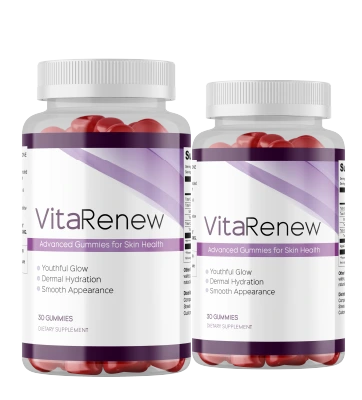
After weeks of reading, I came across VitaRenew, a daily collagen-support gummy designed for women over 40. What distinguished it from the usual "collagen powder" products is that it targets the cofactor side of the equation — not delivering collagen itself, but supporting the enzymes that your fibroblasts need to produce and organize collagen properly. Vitamin C and copper for the assembly enzymes. Zinc and antioxidants for protection and ongoing skin integrity.
- Vitamin C & copper — the two most directly tied to how well collagen is assembled and cross-linked
- Zinc & antioxidant support — for protecting existing structural proteins from ongoing oxidative damage
- Daily gummy format — easy to maintain; I added it to my morning coffee routine and have not missed a day
About six weeks in, the texture on the back of my hands felt noticeably different — less papery when I pressed it, and the fine-line gathering between knuckles seemed less pronounced. I'm not claiming a dramatic reversal. But the direction was right, and the improvement held.
If you're at the beginning of trying to figure this out, the 2-bottle starter pack is where I'd start — enough supply to actually let the nutritional support accumulate before you decide whether it's working for you.
What other women found
"I spent over a year convinced my hands were showing a vitamin deficiency and buying supplements one at a time. Nothing made a real dent. Since switching to VitaRenew about eight weeks ago the texture is genuinely different — it's the first thing that's actually worked."
"I had written off my hands as just 'aging.' After about two months I noticed I wasn't avoiding showing them in photos anymore. That's the best way I can describe the change."
These statements reflect individual experiences. Results are not typical and will vary from person to person.
If you're still in the "is it a vitamin deficiency?" stage
If you searched for this and found my article — welcome to where I was about a year ago. The short version: vitamins are part of the picture, but the fuller explanation is about enzymatic cofactors and what happens to collagen production over time in a part of the body that was always structurally thin and UV-exposed. Creams can soften the surface. What I found that actually moved things was nutritional support for the machinery underneath. VitaRenew is what worked for me, and it's where I'd tell any of my friends to start.