Is Crepey Skin at 60 Normal? What I Found That Finally Made Sense


I thought I'd made peace with crepey skin. In my mid-fifties I'd done the research, accepted that my dermis was going through a hormonal transition, and adjusted my expectations accordingly. Then I turned 60, and something shifted again.
It wasn't dramatic. It was the backs of my hands one morning — they looked different in a way that my fifties-era skin never quite had. Not just the crepe texture I'd learned to live with, but something thinner and more fragile-looking. Like the skin had lost another layer of reserve. When I pressed gently on my inner forearm and let go, there was a moment where it just sat there, slow to return. That didn't used to happen.
I went back to researching. And what I found was that crepey skin at 60 isn't just "more of the same" from the fifties. There are specific biological reasons why things can feel worse after the decade turns — reasons that took me a while to find explained clearly anywhere.
Why 60 feels different from 55
Here's the part I hadn't fully understood before: the estrogen drop that triggers accelerated collagen loss in perimenopause isn't a clean one-time event. For most women it spans years — the late forties and into the fifties — and the steepest period of that loss tends to happen in the years right around the menopause transition. By the time you're 60, that transition is behind you, fully completed. Estrogen isn't declining anymore — it's just low. And the structural effects of a decade spent at that new baseline have added up in the dermis.
The collagen deficit that started in perimenopause has been compounding for ten years. The dermis at 60 isn't in a state of rapid change — it's in a state of sustained, established depletion. And it shows in ways the forties and early fifties didn't quite prepare us for.
The thing I hadn't heard about: growth hormone
The piece that finally clicked for me was learning about growth hormone. I'd known that estrogen mattered for skin. I hadn't known that another hormone — growth hormone, or GH — plays a meaningful role in how active the collagen-producing cells in the dermis actually are.
GH supports fibroblasts — the cells that manufacture the collagen and elastin in the dermis. As we age, GH levels decline too. And the steepest part of that decline happens not in the forties or early fifties but in the second half of the decade, from about 55 to 65.
So at 60, you have two things happening at once: a dermis that's been depleted by a decade of lower estrogen, and fibroblasts that are now receiving less GH signaling and becoming less responsive as a result. Collagen synthesis doesn't stop — but the cells driving it are working in a harder environment than they were five years ago.
That was the explanation I'd been looking for. It wasn't that nothing worked anymore. It was that my skin's own repair system was facing more headwind than it had before — and I needed to support it more deliberately, not less.
The hands and forearms especially
One thing worth knowing: the skin changes at 60 tend to show most clearly in areas that have had the most sun exposure over a lifetime. The backs of the hands, the forearms, the chest — these areas also have the most accumulated UV damage on top of the hormonal changes. UV light over decades degrades existing collagen and disturbs the organized fiber network in the dermis. By 60, that sun-related damage has had time to really show.
This is one reason why topical products often disappoint in this stage. A cream applied to the surface is helping at the wrong layer. The dermis — where the structural changes are — is below where most active ingredients can reach. I'd experienced this personally, and understanding the anatomy of why finally stopped me from looking for the next serum that was going to change everything.
What I started doing — and what I'd suggest
After understanding the biology, I shifted my focus to what the dermis actually needs from within. The body still produces collagen at 60 — what it needs is the right nutritional environment to do it well. The key nutrients are specific:
- Vitamin C — required by the enzymes that stabilize each collagen molecule. Without it, collagen is built in a structurally weak form. Not a marketing claim — it's established skin biology.
- Copper — needed to cross-link the collagen and elastin fibers that give skin its firmness and elasticity. Without copper, fibers are made but never properly assembled into a working matrix.
- Zinc — supports skin integrity and helps regulate the enzymes that break down existing collagen (especially important given sun-accumulated damage).
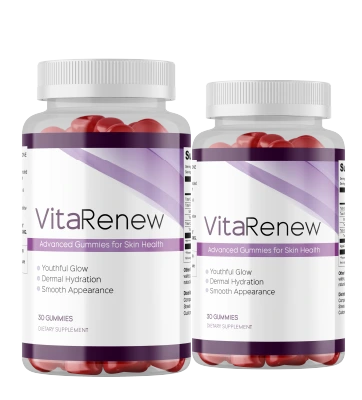
The supplement I've been using is VitaRenew — a daily gummy for women 40 and over that provides exactly these cofactors. It's not a collagen cream, and it's not going to work overnight. But I started noticing a difference in my neck and the backs of my hands after about six weeks — less of that translucent, fragile quality that had been bothering me.
It's a supplement, not a cure for anything. But for those of us at 60 who want to actually support what our skin is still trying to do, it's the most logical thing I've found.
What other women in their sixties are saying
"I noticed my hands looking older practically overnight when I turned 61. I'd tried everything topical. Starting VitaRenew about three months ago — the backs of my hands look noticeably less thin and papery. I've had two people ask me what I'm doing differently."
"I was telling my doctor that my skin seemed to get worse faster at 60 than it had in my fifties. She explained the GH connection and said nutritional support made sense. I've been taking VitaRenew for four months and I genuinely feel like my skin has more substance to it."
These statements reflect individual experiences. Results are not typical and will vary from person to person.
If you've been wondering whether it's normal
Yes — crepey skin at 60 is common, and yes, it tends to feel more pronounced than what you experienced in your early and mid-fifties. The biology behind it — completed estrogen loss, declining GH-supported fibroblast activity, and accumulated UV damage — explains why. That explanation also points toward a more useful response than chasing better topicals: support the nutritional environment that collagen synthesis depends on from within. That's what I've been doing since I started understanding the mechanism, and it's what I'd suggest starting with. VitaRenew was where I started.