Why Your Skin Gets So Crepey After 50 — And What I Found That Actually Helped


I knew my 50s would bring changes. I wasn't quite prepared for the one I noticed first. It wasn't wrinkles — I'd been watching for those. It was a different texture: fine and papery, like tissue that had been folded too many times. It appeared on my neck first, then across my chest and upper arms. The word, I eventually learned, is crepey. And once you know it, you see it everywhere.
I did what most people do: I bought better moisturizers. They helped for an hour or so, then the texture came back. After trying a third expensive serum with the same result, I decided to actually figure out what was happening to my skin — not just treat the surface of it.
It turns out the problem is deeper than a cream can reach
Skin has layers, and the one that gives it its thickness, bounce, and resistance is called the dermis. It's where collagen and elastin live — the structural proteins that keep skin firm and springy. And it's a layer that topical products largely can't access. The outer skin is designed to keep things out; rich moisturizers never get through to where the real change is happening.
What I learned is that collagen production slows naturally from our twenties onward — by about one percent a year. That pace is slow enough that you don't notice it for decades. Then, around the time estrogen begins to decline in perimenopause, the loss accelerates. The two trends meet, and that's why for many women the change feels sudden — like it happened in a year when it was actually building for twenty.
The piece no one told me about
Here's what changed my thinking. Your body doesn't lose the ability to make collagen in your fifties. Collagen is assembled by cells called fibroblasts, and those cells are still active. But the synthesis process depends on specific nutrients — cofactors that drive the enzymes doing the work.
Vitamin C, for example, is not optional for collagen production. It's required by the enzymes that give each collagen molecule its stable structure. Without enough, collagen is built wrong. Copper plays a similar role — it's needed to cross-link the collagen and elastin fibers into the dense, organized network that gives young skin its structure and snap. Zinc and a handful of other micronutrients round out the picture.
I'd never thought of skin texture as a nutrition question before. But once I understood the biology, it made sense that adding a richer cream to a problem caused by missing internal cofactors wasn't going to do much.
What I started using — and what I'd suggest looking into
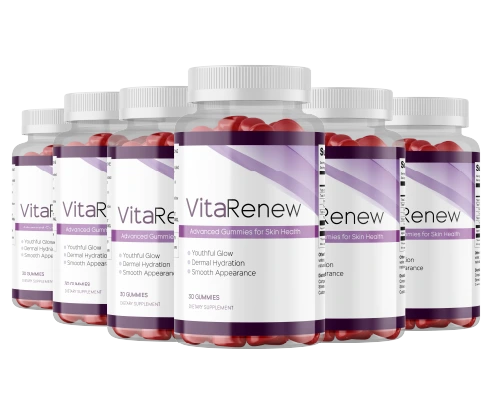
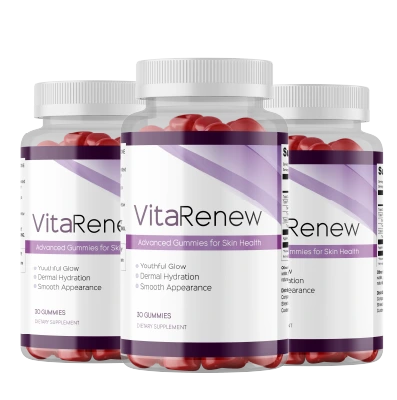
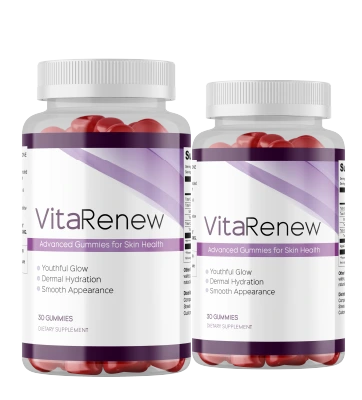
I tried a number of things after doing this research. The one I kept coming back to was VitaRenew, a daily collagen-support gummy made for women in their 40s and 50s. It's not a collagen cream — it works from the inside, providing the micronutrients that collagen synthesis actually depends on.
- Vitamin C & copper — the essential cofactors for collagen production and cross-linking
- Zinc & antioxidant support — for skin integrity and protection from oxidative damage
- Daily gummy format — easy to actually stick with
It's a supplement, not a miracle, and it's not going to undo years of change overnight. But I noticed a difference in my neck and arms after about six weeks, and I've been recommending it to friends who ask what helped me.
What other women are saying
"I'd been skeptical of supplements for skin — but the science made it click for me. My chest and neck look noticeably smoother. I'm genuinely surprised."
"After about two months I started getting comments from people asking if I'd had work done. I hadn't — I just changed what I was putting in my body."
These statements reflect individual experiences. Results are not typical and will vary from person to person.
If you've been where I was
If you've been frustrated by topical products that don't deliver lasting results, it's worth considering whether you're solving at the right layer. Crepey skin is a structural change below the surface. Addressing the nutritional environment that drives the process underneath it — rather than just adding more to the outside — is what finally made a difference for me. VitaRenew is where I'd start.