I Lost the Baby Weight. My Belly Skin Still Looks Like Crinkled Paper.
By five months postpartum, my stomach was almost back. Except the skin had a papery, crinkled texture I'd never seen on my own body before — and waiting it out wasn't working.

I noticed it the way you notice most things you don't want to see — by accident, in the wrong light, in a mirror at an angle I don't usually use.
I was getting dressed on a Tuesday morning, about five months after my daughter was born. I'd lost most of the pregnancy weight. My stomach was close to where it had been before. But when I caught my lower abdomen in the side light of the bathroom mirror, I saw something that stopped me: fine, close-together lines covering the skin below my navel, giving it a texture like paper that had been crumpled and smoothed back out. Not a wrinkle, not a stretch mark. Something else entirely.
I pressed the skin flat with my hand and let it go. It didn't spring back the way it used to.
I had expected some changes postpartum. I hadn't expected this specific one, and I especially hadn't expected it to still be there at five months out — when everything else, more or less, had resolved.
Everything I tried first
My first reaction was to do what most of us do: reach for a product. I tried a body oil marketed specifically for postpartum skin. I tried a firming lotion. I tried a cream with retinol. I massaged the area daily for a month.
None of it changed the texture. The skin looked temporarily smoother after moisturizing, the way dry skin looks better when it's hydrated. But by the next morning, it was the same. The papery quality was structural — I was beginning to understand that — not something that lived on the surface.
I also waited. I'd read that postpartum recovery takes a full year, sometimes longer, and I wanted to give my body a real chance. At nine months, the texture on my lower belly was unchanged. At eleven months, unchanged. By the time my daughter was walking, I'd accepted that this particular thing wasn't going to resolve on its own. I needed to understand it.
What I learned about what pregnancy does to skin
I went looking for a proper explanation — not from product websites but from research on skin structure. What I found reframed everything I'd been thinking about this.
The skin over the abdomen has to accommodate dramatic expansion during pregnancy — the kind of expansion that would tear the skin if the underlying structure weren't capable of remodeling around it. That structure is the dermis: a dense network of collagen fibres, which give skin its substance and resistance, and elastin fibres, which allow it to stretch and spring back. During pregnancy, these fibres elongate, rearrange, and in places, partially break down. It's controlled damage — the body manages it — but it's real damage, and it leaves behind a dermis that needs to rebuild.
The crepey texture I was seeing was what that rebuilding process looked like when it hadn't fully happened yet. The collagen fibres were thinner and less dense than before. The elastin had lost some of its recoil. The skin could stretch when I moved, but it didn't snap back. It settled instead, falling into the fine, crinkled folds that had become so familiar in my mirror.
Losing the baby weight didn't change any of this. The dermis doesn't recover because the volume underneath decreases. It recovers because cells called fibroblasts produce new collagen and elastin to replace what was disrupted. That's an active, biochemical process — and it runs on specific inputs.
The part nobody explains about rebuilding skin
This is where my understanding shifted most significantly. I had assumed that if the dermis was going to repair itself, it was either going to do that or it wasn't — a matter of time and genetics and not much else.
But collagen synthesis isn't passive. It's an enzymatic process that depends on specific micronutrients as cofactors at critical steps. Without those cofactors present in adequate amounts, the repair machinery runs slower or less effectively than it otherwise could.
Three of them matter most here:
- Vitamin C is required by two enzymes that give each collagen molecule its stable triple-helix shape. Without adequate vitamin C, the resulting collagen is structurally weaker. This is not supplement marketing — it's the same biochemistry that explains why vitamin C deficiency first destroys connective tissue. It's been in textbooks for decades.
- Copper activates lysyl oxidase, the enzyme that cross-links individual collagen and elastin fibres into the load-bearing, interlocked network the dermis depends on. Without copper, you can be producing new fibres and still not building the connected matrix that gives skin its firmness and recoil.
- Zinc is involved in the ongoing repair and renewal of skin cells, and in the enzyme activity that governs how existing collagen is maintained and remodeled over time.
I had been eating well postpartum — trying to, anyway, between a newborn and sleep deprivation and the rest of it. But I hadn't been thinking specifically about these three nutrients in the context of what my belly skin was trying to do. A prenatal or postnatal vitamin covers the broad spectrum of recovery needs. It doesn't necessarily address the targeted demands of dermal repair.
What I started taking
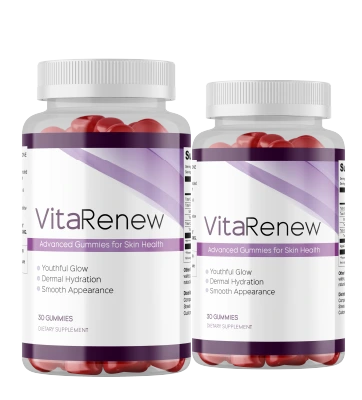
VitaRenew
A daily gummy with vitamin C, copper, and zinc — the cofactors collagen synthesis depends on. Made in an FDA-registered, GMP-certified facility. 60-day money-back guarantee.
For skin that still has repair work ahead of it.
60-day money-back guarantee · One-time purchase, no subscriptionWhy the topicals I used had a ceiling
Once I understood the dermis, the failure of everything I'd applied to the surface made immediate sense.
The dermis is below the epidermis — the layer you can touch and treat with creams. Topical products, regardless of their active ingredients, don't penetrate through the epidermis to reach fibroblasts. They improve the surface: hydration, barrier function, texture in the immediate sense. But they don't reach the structural layer where the actual collagen and elastin work happens.
The postpartum body oil I'd used, the firming cream, the retinol — all working on the wrong layer. That doesn't make them useless in other contexts. But for the structural, textural change I was dealing with, they weren't reaching the place where the problem lived.
Supporting the dermis from the inside — giving it the specific cofactors its repair process depends on — is a fundamentally different approach, and one I hadn't tried because I hadn't known it was a distinct thing to try.
What I found, and why I chose it
I wasn't looking for something dramatic. I've been around the block enough to be skeptical of dramatic claims, and I'd already been burned by postpartum products that promised more than they could deliver. What I was looking for was something with a rational mechanism — something that addressed the specific nutrient needs of collagen synthesis — in a form I could actually take consistently.
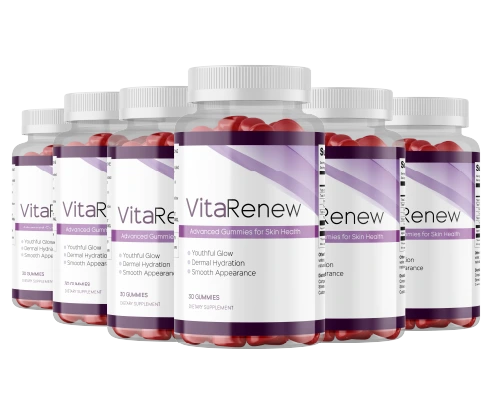
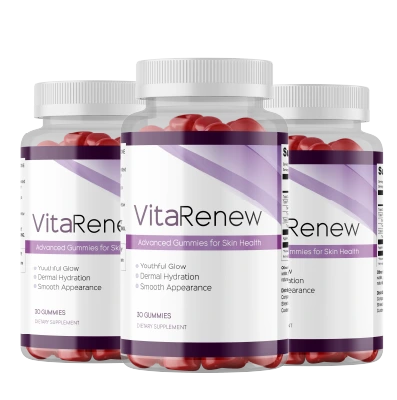
I found VitaRenew. It's a daily gummy built around vitamin C, zinc, and copper, with vitamin E, selenium, and beta-carotene for antioxidant support. It's made in an FDA-registered, GMP-certified facility. It has a sixty-day money-back guarantee.
I want to be precise about what I can and can't claim. This is a supplement that supports skin, hair, and nails. It is not a treatment. It does not diagnose, treat, or cure anything. What I can tell you is the mechanism behind why I chose it and what my experience was. The mechanism is established biochemistry. The experience is mine alone, and results are going to vary.
I started with the two-bottle option to try it without committing to more. The gummy format was important — I have a toddler and I will not reliably take six capsules in the morning. One gummy I can do.
The timeline I actually experienced
Twelve months postpartum when I started. Here is what I noticed, honestly:
At four weeks I noticed nothing beyond the fact that I was taking it consistently, which had been the problem with other supplements. I didn't try to evaluate at four weeks. The dermis doesn't move that fast and I knew it.
At eight weeks, I took a photograph in the same bathroom light I always use. Side by side with the photo I'd taken on day one, there was something — a slight difference in the texture, less pronounced than before. I second-guessed myself. Maybe the light was slightly different. Maybe I was seeing what I wanted to see. I kept going.
At twelve weeks I stopped second-guessing. The papery quality on my lower belly was noticeably better. Not gone — I want to be honest about that — but the skin was smoother, less crinkled in appearance. When I pressed it and let go, it behaved differently. More recoil. Less settling.
At five months, my husband looked at me in a swimsuit at the pool and said, unprompted: "Your stomach looks really good." He knew I'd been dealing with this. He hadn't said anything about it in over a year because there hadn't been anything to say. He said something because he saw something.
I've continued taking it since. I'm not going to claim I've restored my pre-pregnancy skin. I'm 34 with a one-year-old and I'm realistic about what that means. But the skin on my lower belly looks and feels materially better than it did a year ago, and the only thing I changed was adding VitaRenew to my morning routine.
"Seven months postpartum, the crepey skin on my belly was the one thing that wasn't improving. I started VitaRenew after reading about the cofactor angle — made sense to me. By month three the texture was noticeably better. Not perfect, but better in a way I hadn't managed with any cream."
"After my second pregnancy the crepey texture came back worse than the first time. I was skeptical of anything that wasn't a topical, but the topicals hadn't worked. Two and a half months in, I can tell something is different. The skin on my lower stomach is softer and less wrinkled-looking. Still going."
These statements reflect individual experiences. Results are not typical and will vary from person to person.
What I take every morning
VitaRenew
Vitamin C, zinc, and copper in a daily gummy. Supports skin firmness and elasticity from the inside. FDA-registered, GMP-certified facility. 60-day guarantee.
For the skin that stretched to bring someone into the world — and deserves the right support now.
60-day money-back guarantee · One-time purchase, no subscription